Home Blog

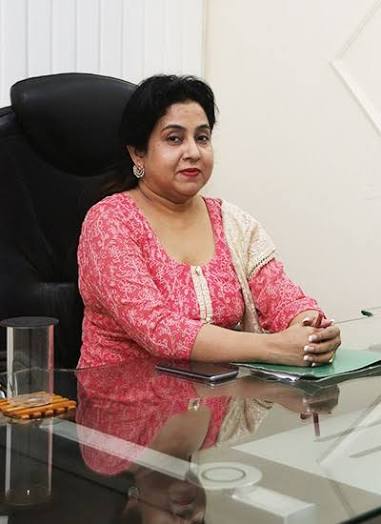
Vivek Kumar: Exampur GS & Hindi Educator, YouTube Teacher from Noida/Delhi

0

Vivek Kumar is an Indian educator and the founder of Exampur, an education platform focused largely on students preparing for government and competitive examinations. His professional journey is closely connected with digital education, YouTube-based teaching, and exam-oriented learning for Hindi-speaking aspirants.

Publicly available information shows that Kumar had a teaching background before building Exampur. YourStory reported that he studied at IEC College of Engineering in Noida, worked as a tutor in Bulandshahr, Uttar Pradesh, and began uploading educational videos to YouTube in 2018. As Exampur grew, its team later shifted operations to Delhi. YourStory.com

Vivek Kumar has appeared in Exampur’s educational content covering General Studies, General Knowledge, current affairs and Hindi. More recent Exampur content in 2026 continues to feature him in GS, GK, current-affairs and competitive-exam sessions, while the official channel also documents his Hindi classes for examinations such as the UP Police Constable exam. YouTube

Who Is Vivek Kumar?

Vivek Kumar is best known as the founder of Exampur, an exam-preparation platform that developed from a YouTube-based educational initiative into a broader online and offline learning ecosystem.

According to a detailed profile published by YourStory, Kumar was described as a computer engineer who studied at IEC College of Engineering in Noida. Before Exampur became an established education platform, he gave tuition to younger students in Bulandshahr. He started uploading educational videos through the Exampur YouTube initiative in June 2018. YourStory.com

This background is important when understanding the search term Vivek Kumar Exampur. His relationship with the platform is not simply that of a guest teacher or occasional faculty member. Public sources identify him as its founder, while current Exampur educational material continues to feature him.

Reports from 2026 also continue to identify Vivek Kumar as the founder of Exampur, confirming that the association remains relevant rather than being only a historical connection. The Wire

His connection with Noida and Delhi should also be described carefully. Reliable reporting links his education with Noida, while YourStory reported that the Exampur team moved to Delhi in October 2018 as its YouTube operation expanded. Therefore, Noida and Delhi form part of his educational and professional journey, although available evidence should not be interpreted as proof that either city is his birthplace. YourStory.com

Vivek Kumar and Exampur

Exampur began with online teaching and developed around the needs of competitive-examination aspirants, particularly students seeking preparation resources in accessible formats.

YourStory reported that the platform began with Vivek Kumar creating and uploading YouTube lessons. As the channels gained an audience, the team developed infrastructure for live online teaching and expanded the range of educational resources offered to learners. YourStory.com

The platform has covered preparation for different categories of government recruitment examinations. Public Exampur material includes content for examinations connected with SSC, Railways, state-level recruitment, police recruitment and UPSSSC, among others. The exact subjects and batches offered can change according to examination schedules, so students should confirm current courses through official Exampur resources rather than relying on older course information.

As of 2026, Vivek Kumar remains visible in official Exampur educational content. For example, Exampur published GS and current-affairs sessions featuring Vivek Sir for UPSSSC PET and SSC GD preparation. YouTube

Students wanting to check his current classes directly can refer to the official Exampur YouTube class featuring Vivek Sir.

Teaching General Studies and Hindi

General Studies is an important part of many government recruitment examinations because it can bring together several areas of knowledge, including history, geography, polity, science, economics, static GK and current affairs. The exact syllabus varies from one examination to another.

Recent publicly available content connects Vivek Kumar Exampur particularly strongly with GS, GK and current affairs. For example, an official Exampur video published in June 2026 presented him in a session covering GK and current affairs for UPSSSC PET and SSC GD preparation. Recent Exampur-linked posts have also promoted Vivek Sir’s UPSSSC PET General Knowledge and General Studies sessions. YouTube

Hindi is another documented part of his teaching record. Exampur’s verified YouTube channel published Hindi practice classes taught by Vivek Sir for UP Police Constable preparation in August 2024. This provides a primary-source basis for describing him as someone who has taught Hindi for competitive-exam aspirants. YouTube

The evidence is slightly different for the two subjects: GS and current-affairs teaching is visible in recent 2026 material, while the Hindi classes identified during research come from earlier official Exampur content. It is therefore more accurate to say that his publicly documented teaching content includes GS, GK, current affairs and Hindi, rather than assuming every subject is part of his current daily schedule.

Teaching Approach and Educational Content

An educator’s teaching method is difficult to judge accurately without directly reviewing a meaningful sample of their classes. For that reason, it is better to describe Vivek Kumar’s public content rather than attach unsupported labels such as “unique,” “best” or “most effective.”

The available videos show an exam-focused format. Classes are generally organised around particular examinations, subjects, practice sets, syllabus areas or current-affairs requirements. This format helps students identify whether a session matches the examination they are preparing for.

For General Studies, his available Exampur material includes GK and current-affairs sessions connected with UPSSSC PET and SSC GD. His documented Hindi content includes practice-oriented classes for UP Police examinations. YouTube

This subject-to-exam connection is useful because competitive-exam students often need more than general knowledge of a topic. They also need to know whether the material corresponds with the pattern and syllabus of their target examination.

Vivek Kumar on YouTube

YouTube is central to the history of Exampur and to Vivek Kumar’s public identity as an educator.

According to YourStory, Kumar started Exampur’s YouTube channel in June 2018. The report explains that the early operation was relatively simple, with online lessons being created before Exampur developed into a larger education platform. YourStory.com

Students can still find Vivek Sir featured on Exampur’s verified YouTube presence. Rather than relying on re-uploaded clips or unofficial channels, learners should preferably check videos published directly through Exampur when they want to confirm a class, subject, batch or examination update.

For example, the official channel’s UP Police Hindi practice class by Vivek Sir demonstrates his documented Hindi teaching, while newer Exampur videos show him handling GS, GK and current-affairs-oriented content.

YouTube also makes it easier for students to sample an educator’s teaching before deciding whether that educator matches their learning needs.

Students and Competitive Exam Preparation

Vivek Kumar’s publicly available Exampur content is primarily relevant to learners preparing for government recruitment and competitive examinations.

Recent sessions featuring him have been linked with exams such as UPSSSC PET and SSC GD, while earlier Hindi material was specifically prepared for UP Police Constable candidates. Exampur as a wider platform has offered preparation resources across multiple government-exam categories. YouTube

Students should still distinguish between the exams taught by the overall Exampur faculty and those personally taught by Vivek Kumar. A course being available on Exampur does not automatically mean Kumar teaches every subject within that course.

This distinction is especially important when comparing educators. Aspirants should verify the faculty assigned to their current batch before purchasing or following a course.

Readers interested in other competitive-exam educators can also explore the Gagan Pratap educator profile on The Educators Journey, which focuses on mathematics education.

Another relevant profile is the Aditya Ranjan educator article on The Educators Journey for readers researching educators connected with mathematics and competitive-exam preparation.

Role of Digital Learning for Competitive Exam Students

Digital platforms have changed how competitive-exam aspirants access classes. A student who does not live close to a major coaching hub can now watch recorded lectures, attend live sessions, revise individual topics and compare teaching approaches online.

Vivek Kumar’s journey with Exampur reflects this broader shift. His early educational videos were published on YouTube before Exampur expanded into a wider learning platform. YourStory reported that the organisation’s growth was strongly connected with its online teaching model. YourStory.com

However, access to more content does not automatically make preparation better. Students still need a structured syllabus, practice, revision and reliable official information about their examination.

Why Educator Profiles Matter

Choosing an educator should involve more than looking at popularity or social-media numbers.

Students should consider whether the teacher actually covers their required subject, whether recent classes match the current syllabus, whether explanations are understandable to them, and whether sufficient practice material is available.

Watching a few official classes before committing to a longer course can provide a much clearer picture than promotional clips alone.

Profiles such as this one are therefore most useful when they help students verify an educator’s background, subjects and platforms without making exaggerated claims about results or superiority.

Conclusion

Vivek Kumar is a founder and educator closely associated with Exampur’s development as a digital competitive-exam learning platform. Reliable reporting identifies him as a computer-engineering graduate with a connection to Noida through his education and to Delhi through Exampur’s later operations. His teaching journey also predates the growth of the platform itself. YourStory.com

Official Exampur content documents Vivek Kumar teaching General Studies, GK, current affairs and Hindi for competitive-examination audiences. His more recent 2026 appearances are particularly connected with GS, GK, current affairs and exam guidance, while official Hindi teaching videos are also available from earlier Exampur sessions. YouTube

For students researching Vivek Kumar Exampur, the most reliable approach is to check recent material published through Exampur’s official channels and confirm that the specific class, subject and examination match their current preparation needs.

Frequently Asked Questions

1. Who is Vivek Kumar?

Vivek Kumar is an Indian educator and the founder of Exampur, a platform focused on competitive and government-exam preparation. Public reporting says he had a teaching background, studied engineering in Noida and began uploading educational videos through Exampur in 2018. YourStory.com

2. Is Vivek Kumar associated with Exampur?

Yes. Public sources identify Vivek Kumar as Exampur’s founder, and official Exampur content continued to feature classes and examination-related sessions by Vivek Sir in 2026. This indicates that his association with the platform remains current and publicly visible. The Wire

3. What subjects does Vivek Kumar teach?

Officially published Exampur material documents Vivek Kumar teaching General Studies, General Knowledge, current affairs and Hindi-related competitive-exam content. His recent material is especially visible in GS, GK and current-affairs preparation for examinations such as UPSSSC PET and SSC GD. YouTube

4. Does Vivek Kumar teach General Studies and Hindi?

Yes, both subjects are supported by official Exampur content. GS and current-affairs classes featuring Vivek Sir were published in 2026, while Exampur’s verified YouTube channel also contains Hindi practice sessions taught by him for UP Police preparation. YouTube

5. Where can students watch Vivek Kumar’s classes?

Students can find Vivek Kumar’s publicly available educational sessions through Exampur’s official YouTube presence and other official Exampur learning resources. Checking official channels is preferable because it helps students confirm the latest faculty, syllabus, class schedule and examination-specific material.


Aditya Ranjan: Rankers Gurukul Maths Educator & YouTube Teacher

Mathematics is a major part of competitive-exam preparation in India, particularly for students preparing for SSC, Railway, Banking, Defence, and other government recruitment examinations. Along with understanding formulas, students need regular practice, familiarity with different question patterns, calculation speed, and the ability to solve problems within limited time.

Aditya Ranjan is a Mathematics educator whose public teaching work is closely associated with Rankers Gurukul and online competitive-exam preparation. His educational content includes Mathematics classes, practice-oriented sessions, exam-focused problem solving, short methods, and lessons covering both Arithmetic and Advanced Mathematics.

His presence is not limited to paid courses. A considerable part of Aditya Ranjan Maths content is also available through YouTube, giving students access to individual concepts, revision sessions, practice questions, exam strategies, and topic-based lessons.

Official Rankers Gurukul course pages continue to list Mathematics batches taught by Aditya Ranjan, while his Maths-focused YouTube presence has remained active with educational uploads.

Who Is Aditya Ranjan?

Aditya Ranjan is an educator primarily known for teaching Mathematics for competitive examinations.

His professional identity online is strongly connected with Mathematics and Quantitative Aptitude. Rankers Gurukul course listings feature him as Mathematics faculty for courses covering Arithmetic and Advanced Maths, including preparation for preliminary and mains-level competitive examinations.

His verified YouTube presence also identifies him as a Mathematics teacher. The public description of the verified Aditya Ranjan Talks channel states that he has qualified examinations including SSC CGL, CHSL, CPO and CDS, and that he was selected as an Excise Inspector through SSC CGL 2019. These career details come from his own official public profile and associated educational platforms rather than independent government records, so they are best understood as publicly stated professional background.

The main publicly verifiable part of his current educator profile, however, is his continuing work in competitive Mathematics through Rankers Gurukul courses and digital educational content.

Aditya Ranjan and Mathematics Education

The Mathematics taught for competitive examinations differs from conventional classroom Mathematics in one important way: students need to combine understanding with speed.

Knowing how percentage works, for example, is only the starting point. An aspirant must also recognize the type of percentage problem, select an efficient approach, calculate accurately, and complete the question without spending too much time.

Publicly available Aditya Ranjan Maths lessons reflect this exam-oriented approach.

His teaching material and course listings cover both Arithmetic and Advanced Mathematics. Public Rankers Gurukul resources associated with his classes include topics such as Percentage, Ratio, Algebra, Trigonometry, Time and Work, Number System, and other areas commonly included in competitive-exam Mathematics.

This puts his work primarily within the competitive-exam education space rather than general school Mathematics.

Readers interested in exploring another approach to competitive Mathematics can also read The Educators Journey’s profile of Rakesh Yadav and his Mathematics teaching journey.

Aditya Ranjan and Rankers Gurukul

The connection between Aditya Ranjan and Rankers Gurukul is clearly documented through the platform’s official course catalogue.

Rankers Gurukul has published multiple Mathematics batches under his name. These include Maths Special courses covering Arithmetic and Advanced Mathematics for preliminary and mains-level examinations. Current publicly indexed course pages also identify him as the Mathematics faculty member in broader combination courses containing Maths, Reasoning, English, GK/GS and other subjects.

The platform’s historical listings show that this association is not limited to a single recent batch. Rankers Gurukul has course pages featuring Aditya Ranjan going back several years, including Mathematics batches published in 2022, 2024 and 2025.

Students who want to check the platform’s current offerings can visit an official Rankers Gurukul Mathematics course page featuring Aditya Ranjan.

Because course availability, batches and schedules can change, students should rely on current official listings rather than older social media posts when checking what is presently available.

Aditya Ranjan as a YouTube Teacher

YouTube forms an important part of Aditya Ranjan’s public educational presence.

A verified Maths-focused channel, Maths WIZARD Aditya Ranjan, publishes Mathematics lessons connected with competitive examinations. Publicly available videos include individual concepts, practice questions, problem-solving sessions and shorter videos demonstrating approaches to particular types of questions.

For example, published lessons have covered Age problems, Number System, recurring decimals, Mixture and Alligation and other competitive Mathematics areas. The descriptions of these videos also connect the lessons with exams such as SSC and Railway recruitment examinations.

A separate verified channel, Aditya Ranjan Talks on YouTube, has a broader focus. Its public description identifies Mathematics teaching as part of Aditya Ranjan’s background while the channel itself also features study strategy, guidance, motivation and government-exam-related content.

This distinction is useful for students searching for Aditya Ranjan YouTube content. Those looking specifically for Maths lessons may encounter the Maths-focused channel, while other educational and strategy content may appear through Aditya Ranjan Talks.

Teaching Approach and Educational Content

Public classes associated with Aditya Ranjan suggest an approach built around concept explanation followed by question solving.

Rankers Gurukul describes its Mathematics courses as covering both Arithmetic and Advanced Maths, with class notes and practice sheets included in several batches. Course pages also show lessons arranged around individual chapters such as Percentage, Algebra, Ratio and Trigonometry.

His publicly available Number System material, for example, is presented in a type-wise and level-wise format. Other resources include practice sheets with solutions, showing that question practice forms an important part of the learning material associated with his teaching.

Competitive Mathematics usually requires both standard methods and efficient solving techniques. Short methods can be helpful under exam conditions, but students benefit most when they understand the mathematical reasoning behind those methods.

A useful learning sequence is therefore:

Understand the concept, study the solving method, attempt questions independently, review mistakes, and then work on speed.

Watching a teacher solve questions can help explain a method, but independent practice remains necessary for converting that explanation into actual exam performance.

For readers exploring different Mathematics educators, The Educators Journey also features Abhinay Sharma and his competitive-exam Mathematics teaching.

Mathematics Topics and Exam Preparation

The available Aditya Ranjan Maths Teacher content covers a broad range of areas commonly found in competitive-exam Quantitative Aptitude.

Public lessons and Rankers Gurukul course pages show coverage of topics including:

  • Percentage
  • Ratio
  • Number System
  • Algebra
  • Trigonometry
  • Time and Work
  • Age-based problems
  • Recurring decimals
  • Mixture and Alligation
  • Arithmetic Mathematics
  • Advanced Mathematics
  • Practice and previous-exam-style questions

Rankers Gurukul describes its Maths courses featuring Aditya Ranjan as relevant to SSC, Railway, Banking, Defence and other competitive examinations.

Students should still check the official syllabus of the examination they are preparing for rather than assuming that every online course covers every requirement of every exam.

This is especially important because examinations can differ in difficulty, topic weightage, pattern and the amount of time available for Mathematics.

Role of YouTube in His Teaching Journey

YouTube has changed the way competitive-exam students access educators.

Earlier, studying with a particular teacher often meant living near a coaching centre or attending classes at a fixed time. Recorded digital lessons allow students from different locations to access explanations without being physically present in the same classroom.

For Mathematics, this format has practical advantages. Students can pause a difficult calculation, replay a concept, revisit an older chapter and attempt a question before watching the solution.

Aditya Ranjan’s digital presence demonstrates this broader development in competitive-exam education. Topic-specific lessons can be accessed separately from structured paid courses, allowing students to use YouTube for concept revision, sample classes or additional question practice.

However, access to a large amount of free content can also create confusion. Moving continuously between playlists and educators may make preparation less structured.

A student using YouTube seriously for Mathematics should therefore create a clear chapter sequence and combine video learning with independent practice, revision and timed testing.

Why Students Search for Aditya Ranjan

Searches for terms such as Aditya Ranjan Maths, Aditya Ranjan Rankers Gurukul, Aditya Ranjan YouTube and Aditya Ranjan Maths Teacher can have several different intentions.

Some students may be looking for a complete Mathematics course. Others may need help with one chapter such as Percentage, Algebra or Number System. Some may be searching for practice sessions, previous-question discussions or short solving methods.

Students may also search his name when checking Rankers Gurukul batch details or looking for study strategy and competitive-exam guidance.

These different search patterns reflect how online educators now operate across several learning formats rather than through a single classroom or course.

Aditya Ranjan’s Digital Presence

Aditya Ranjan currently has a visible educational presence across YouTube and Rankers Gurukul’s digital learning ecosystem.

The official Rankers Gurukul website contains courses featuring him as Mathematics faculty, while verified YouTube channels publish Maths, exam preparation, guidance and related educational videos.

His Mathematics-focused YouTube content remains publicly active, with lessons addressing individual competitive Maths concepts as well as broader practice-oriented topics.

As with any online educator, students checking current batches, course schedules or new resources should verify them through the latest official pages because digital course offerings can change over time.

Final Thoughts

Aditya Ranjan’s publicly documented educational work places him firmly within the competitive-exam Mathematics space. His continuing association with Rankers Gurukul is supported by official course listings, while his verified YouTube presence makes Mathematics lessons and exam-related educational content accessible beyond structured classroom-style courses.

The available Aditya Ranjan Mathematics Teacher content covers both Arithmetic and Advanced Maths, with topics ranging from Percentage and Ratio to Algebra, Trigonometry, Number System and other areas commonly encountered in government recruitment examinations.

His online presence also reflects a wider change in education. Students are no longer limited to a single classroom, location or timetable. They can combine structured courses with recorded lessons, free YouTube classes, practice sheets and revision resources.

The effectiveness of those resources, however, ultimately depends on how they are used. Mathematics improves through active problem solving. Clear explanations can make a difficult topic easier to understand, but regular practice, revision, error analysis and timed question solving are what help students turn that understanding into stronger exam preparation.

For readers researching Aditya Ranjan, his verified teaching content, Rankers Gurukul course listings and public YouTube channels provide the clearest picture of his current professional presence as a Mathematics educator and online teacher.

Gagan Pratap: Maths Teacher, Careerwill & SelectionWay Educator

Mathematics is one of the most important sections for many government and competitive examinations in India. For students, however, learning formulas is only one part of preparation. They also need to understand concepts, recognise question patterns, practise regularly, and improve their speed without losing accuracy.

Gagan Pratap is a mathematics educator whose name has become familiar among students preparing for government recruitment examinations. His educational work has appeared across platforms including YouTube, Careerwill and, more recently, SelectionWay. His publicly available lessons largely focus on exam-oriented Mathematics, problem solving, previous-year questions, calculation techniques and practice.

His digital presence also reflects a wider change in Indian competitive-exam education. Students who once depended mainly on physical coaching centres can now learn from recorded lectures, live classes, practice sessions and free educational videos from almost anywhere.

Who Is Gagan Pratap?

Gagan Pratap is an Indian Mathematics educator known primarily for teaching competitive-exam Mathematics.

His public educational content is strongly connected with preparation for SSC, Railway and other government recruitment examinations. His verified YouTube presence contains Mathematics lessons as well as preparation-oriented videos covering concepts, question practice and exam strategies. The channel describes its focus as preparation for government examinations, particularly SSC and Railway-related exams.

Careerwill also documents Gagan Pratap in its SSC educational ecosystem. Its SSC coaching pages contain references to his Mathematics teaching and feedback from students who studied Maths from him through the platform. At the same time, current public information in 2026 shows substantial activity through SelectionWay, where several courses and batches are listed under his name.

This distinction matters when describing his professional profile accurately. Careerwill is an established part of his documented teaching history, while SelectionWay is particularly visible in his current online educational activity.

Gagan Pratap’s Journey as a Mathematics Educator

Publicly available records show that Gagan Pratap has been teaching Mathematics online for several years.

One of his YouTube Mathematics classes available from 2019 covers the Number System and Remainder Theorem and was presented as preparation material for exams including SSC CGL, CHSL and CPO. This provides a clear public record of his competitive-exam Mathematics teaching going back several years.

Over time, his digital teaching presence expanded beyond individual video lessons. Mathematics courses, structured batches, practice resources and exam-specific preparation became part of the broader learning environment around his teaching.

Today, SelectionWay lists a number of current and recorded programmes under Gagan Pratap’s name. These include Mathematics-focused programmes as well as preparation batches connected with SSC, Railway examinations, UPSSSC PET and other recruitment tests.

This development from individual online lessons to a broader digital learning system is similar to the path taken by many major competitive-exam educators in India.

Readers interested in another approach to competitive Mathematics can also explore Abhinay Sharma’s Mathematics teaching and exam-preparation approach on The Educators Journey.

Gagan Pratap and Careerwill

Gagan Pratap’s association with Careerwill is well documented.

Careerwill’s SSC coaching pages continue to contain references to Gagan Pratap and testimonials from former students discussing Mathematics classes they took from him. Some of those testimonials refer specifically to SSC CGL preparation and earlier examination cycles.

That makes Careerwill a relevant part of his professional teaching history.

However, it is important not to assume that older course listings or testimonials automatically describe a teacher’s current professional arrangement. Current public information reviewed for this article shows that Gagan Pratap is now prominently teaching through SelectionWay, where 2026 batches continue to appear under his name.

Therefore, describing him simply as a “Careerwill teacher” without additional context could give readers an incomplete picture. A more accurate description is that he is a competitive-exam Mathematics educator with a documented Careerwill association and a substantial current presence through SelectionWay.

Students who want to understand another Mathematics educator connected with the competitive-exam space can read this profile of Rakesh Yadav and his Mathematics teaching for competitive exams.

Gagan Pratap Maths Teaching Style

The publicly available Gagan Pratap Maths content suggests an approach built around both concept understanding and exam application.

His channel descriptions repeatedly emphasise concepts, practice, solving speed and exam-oriented preparation. The content includes Arithmetic and Advanced Mathematics topics, previous-year questions, revision sessions and calculation-focused lessons.

This is particularly relevant for competitive examinations because simply knowing a formula does not always translate into a correct answer under time pressure.

A student may understand percentages, for example, but still struggle when percentage concepts appear inside questions on profit and loss, discount or data interpretation. Similarly, understanding Geometry theoretically is different from recognising the quickest valid approach when solving a timed question.

Practice-oriented Mathematics teaching attempts to bridge this gap. Students first understand the principle, see how it is applied, and then solve enough questions independently to develop confidence and speed.

Short methods and calculation techniques can also be useful, but they work best when learners understand the underlying concept instead of memorising isolated tricks.

Gagan Pratap on YouTube

YouTube is one of the most visible parts of Gagan Pratap’s educational presence.

The Gagan Pratap Maths channel is verified and has a multi-million subscriber audience. Rather than relying on a fixed subscriber number that may quickly become outdated, it is more useful to look at the type of educational material available there.

Students can find Mathematics lectures, question-solving sessions, SSC-oriented preparation, Railway Mathematics, previous-year questions, calculation techniques and other government-exam content.

Learners can explore the official Gagan Pratap Maths YouTube channel to see the current videos and playlists directly.

YouTube offers an important advantage for Mathematics learners: repetition.

If a classroom explanation moves too quickly, a student may hesitate to interrupt repeatedly. In a recorded lesson, the learner can pause a calculation, replay a difficult step and attempt the question before watching the solution.

That flexibility can be particularly useful for students studying independently or living far from major coaching centres.

Competitive Exams and Mathematics Preparation

Gagan Pratap’s publicly available educational content is mainly relevant to government and competitive-exam aspirants.

His channel materials reference SSC examinations such as SSC CGL, CHSL, CPO, GD and MTS, along with Railway-related examinations. Current SelectionWay listings further show courses connected with SSC, Railway recruitment, UPSSSC PET and other government-exam categories.

For these students, Mathematics preparation generally involves several connected skills.

Concept clarity is the starting point. After that comes chapter-wise practice, previous-year questions, speed improvement, accuracy testing and revision.

A student who watches lectures but rarely solves questions independently may recognise solutions without being able to reproduce them during an examination. That is why video learning should ideally be followed by active problem solving.

Why Students Search for Gagan Pratap Maths

Searches such as “Gagan Pratap Maths,” “Gagan Pratap Maths Teacher” and “Gagan Pratap YouTube” are closely connected with his large digital teaching presence.

Learners may be looking for a specific Mathematics chapter, a previous-year question session, calculation practice, an exam-focused batch or a complete learning sequence.

Another reason is accessibility. A student does not need to attend the same physical coaching centre as the educator to access a public YouTube lesson.

This changes the way students choose educational resources. Instead of selecting a teacher only because that teacher operates nearby, learners can first watch publicly available lessons, understand the teaching method and then decide whether that approach works for them.

SelectionWay and Gagan Pratap’s Current Online Learning Presence

One of the most important updates when discussing Gagan Pratap today is SelectionWay.

The official SelectionWay website currently presents a broad government-exam preparation ecosystem containing live batches, recorded courses, previous-year papers, study resources, testing options and other learning tools. Several active course listings are associated directly with Gagan Pratap.

Students who want to check current programmes rather than depend on old course information can visit the official SelectionWay platform.

This is especially important for educational biographies because edtech associations can change over time. An article should distinguish between platforms that form part of an educator’s past career and those where current teaching activity can be independently observed.

Online Education and Gagan Pratap’s Reach

Digital education has reduced geographical barriers in competitive-exam preparation.

A learner in a small town can watch the same Mathematics lesson as a student living in a large coaching hub. Recorded classes also allow students to build their own study schedule instead of depending entirely on fixed classroom timings.

Gagan Pratap’s digital teaching activity demonstrates this model clearly. YouTube provides freely accessible lessons, while platforms such as SelectionWay provide more structured batches and learning resources.

However, accessibility does not automatically guarantee improvement.

Students still need consistent practice, revision and independent problem solving. Watching several hours of Mathematics content without attempting questions can create familiarity, but familiarity is not the same as mastery.

A useful learning sequence is simple: understand the concept, attempt questions independently, study mistakes, practise previous-year problems and then test speed under timed conditions.

Who Can Learn from Gagan Pratap’s Mathematics Content?

Based on the publicly available material, his Mathematics content may be relevant to students preparing for SSC and Railway recruitment examinations, learners working on Quantitative Aptitude, aspirants looking for previous-year question practice, and students who prefer video-based Mathematics explanations.

It may also help learners who need additional practice after studying a concept elsewhere.

No educator or online course can guarantee examination success. The usefulness of a teaching resource depends on a student’s syllabus, present Mathematics level, preferred learning method and willingness to practise independently.

Students should therefore evaluate classes based on whether they understand the explanations and can apply the methods to new questions without assistance.

Final Thoughts

Gagan Pratap has an established public presence as a competitive-exam Mathematics educator. His teaching history includes a documented association with Careerwill, while his current digital activity is strongly visible through Gagan Pratap Maths on YouTube and courses offered through SelectionWay.

His publicly available material focuses substantially on concepts, question solving, practice, speed and Mathematics preparation for government recruitment examinations.

For students, the value of such digital education lies in accessibility and flexibility. A lesson can be paused, repeated and combined with independent practice in a way that traditional classroom learning does not always allow.

At the same time, strong Mathematics preparation depends on more than following a well-known educator. Students need to solve questions themselves, identify repeated mistakes, revise regularly and gradually improve both accuracy and speed.

That balanced approach is ultimately what turns online Mathematics lessons into practical competitive-exam preparation.

Abhinay Sharma: Making Mathematics Easier for Competitive Exam Aspirants in New Delhi & Online Through Abhinay Maths

0

Mathematics can be one of the most challenging sections of competitive-exam preparation. Understanding a formula is only the beginning. Aspirants also need to recognize question patterns, calculate accurately, choose an efficient solving method, and work within strict time limits.

This combination of concept clarity, practice, speed, and accuracy is particularly important in government recruitment examinations where Mathematics or Quantitative Aptitude forms part of the selection process.

Abhinay Sharma is a Mathematics educator whose work is closely associated with Abhinay Maths, an educational platform focused substantially on government-exam preparation. His publicly available teaching content includes Mathematics lessons, problem-solving sessions, previous-year questions, calculation-focused classes, and exam-oriented preparation.

The growth of Abhinay Maths also reflects a broader change in Indian competitive-exam education: students who once depended heavily on physical coaching centres can now combine online classes, recorded lectures, tests, PDFs, books, and free video lessons in a more flexible preparation system.

Who Is Abhinay Sharma?

Abhinay Sharma is a Mathematics educator known for teaching Maths for government recruitment and other competitive examinations.

The current Abhinay Maths platform identifies him as faculty for Mathematics courses, while the official Abhinay Maths YouTube presence continues to publish classes featuring him. Recent lessons cover subjects such as Arithmetic, Geometry, Mensuration, calculation techniques, and SSC-oriented Mathematics preparation.

It is important, however, to separate publicly documented information from promotional claims or outdated profile information. This article therefore focuses primarily on his verifiable teaching work and the educational resources currently associated with Abhinay Maths rather than attempting to construct a personal biography from incomplete online information.

Abhinay Sharma, Delhi and the Development of Abhinay Maths

There is a documented Delhi connection in the history of Abhinay Maths.

According to the platform’s own About page, its journey began with an offline coaching centre in Delhi in 2010 before expanding into online education. Its present official contact information, however, lists an address in Sector 136, Noida, Uttar Pradesh.

For that reason, it is more accurate to describe Delhi as part of the platform’s documented development rather than assume that Abhinay Sharma is currently based in New Delhi.

This transition from an offline coaching environment to a digital learning platform is significant because it mirrors a wider transformation in competitive-exam preparation. Students no longer necessarily need to live near a major coaching centre to access an educator’s lessons.

Understanding Abhinay Maths

Abhinay Maths has developed beyond a collection of individual Mathematics videos.

Its current official website presents a broader online learning environment containing live and recorded classes, test series, study material, e-books, quizzes, previous-year papers, doubt support, and other preparation resources.

Students can explore these resources through the official Abhinay Maths website.

The platform currently lists preparation resources connected with examinations such as SSC and other government recruitment tests. Individual course pages show Mathematics coverage across both Arithmetic and Advanced Maths.

For students, the important distinction is between using an isolated video to understand one difficult topic and following a structured preparation system. Both can be useful, but they solve different problems.

A video may help a learner understand percentage or geometry. A structured course, on the other hand, can provide an order in which chapters, practice, revision, and tests are completed.

Abhinay Sharma’s Approach to Competitive Mathematics

The publicly available Abhinay Sharma Maths content suggests a strongly problem-oriented approach.

Recent and archived classes include Arithmetic, Geometry, Mensuration, calculation practice, formulas, previous-year questions, and speed-focused problem solving. This is consistent with the demands of competitive Mathematics, where knowing a concept is valuable only if the student can apply it correctly to a question.

One useful principle visible across this type of teaching is that Mathematics preparation should connect three stages:

Understand the concept → apply it to questions → improve the solving process.

Students sometimes reverse this sequence. They search for the fastest shortcut before understanding the standard mathematical method.

That approach can work for familiar questions but become unreliable when the examiner changes the wording or structure.

Concept Clarity Before Shortcuts

Short methods have an important place in competitive-exam Mathematics, particularly when candidates are working under time pressure. However, a shortcut becomes much more dependable when a student understands why it works.

Consider percentage problems. Memorizing one trick may solve a specific type of question, but understanding percentage relationships can help across profit and loss, discount, interest, data interpretation, population change, and other related problems.

The same principle applies to ratio, averages, algebra, geometry, mensuration, and many other areas.

A student should therefore ask two questions after learning a method:

Can I explain why this method works?

Can I solve a slightly different question without copying the teacher’s steps?

If the answer to both is yes, the learner is moving from imitation towards actual mathematical understanding.

Students interested in comparing this with another competitive-exam teaching model can read The Educators Journey’s profile of Rakesh Yadav and his Mathematics teaching for competitive exams.

Mathematics for Competitive Exam Aspirants

Competitive exam Mathematics requires a different preparation mindset from simply completing a school chapter.

Aspirants often need to develop four abilities together: conceptual understanding, calculation ability, question recognition, and time management.

This is why Maths preparation for competitive exams should not end after watching lectures.

After understanding a topic, students need enough independent questions to discover where they hesitate or make mistakes. Previous-year questions are particularly useful because they expose learners to the actual style in which concepts have been tested.

Abhinay Maths currently offers previous-year papers and test-oriented resources alongside classes. That combination can be useful when students treat lectures as the learning stage and questions as the testing stage.

The Role of Practice in Improving Maths Performance

Mathematics is difficult to improve through passive learning.

Watching an educator solve 30 questions can create a feeling of familiarity, but familiarity is not the same as being able to solve those questions independently.

A better routine is to pause before the solution, attempt the question, record the method used, and then compare it with the educator’s approach.

Mistakes should also be classified.

Was the formula forgotten? Was the concept misunderstood? Was there a calculation error? Was the correct method too slow? Was the question interpreted incorrectly?

Once students begin identifying the reason behind errors, revision becomes much more focused.

Abhinay Maths and Online Mathematics Learning

Online learning is central to the current Abhinay Maths model.

The platform lists live interactive classes, recorded lectures, test series, study resources, quizzes, doubt support, and previous-year material. Its YouTube channel provides another route through which students can access Mathematics teaching and exam-related content.

Students can also explore publicly available lessons through the official Abhinay Maths YouTube channel.

This combination illustrates one of the biggest advantages of online Maths classes: flexibility.

A learner can pause a difficult calculation, replay an explanation, revise an older topic, or study outside traditional classroom hours. Someone living far from Delhi, Noida, or another coaching hub can still access the same digital lesson.

That geographical accessibility has become one of the defining features of online competitive-exam education.

Learning Mathematics Effectively Through Digital Platforms

The availability of online classes creates opportunities, but it can also create a new problem: too much content.

Students may jump between teachers, playlists, PDFs, books, Telegram material, apps, and test series without completing any one resource systematically.

A more effective approach is to choose a primary learning system and use other resources selectively.

For each chapter, students can follow a simple cycle:

  1. Learn the core concept.
  2. Make concise notes or a formula sheet.
  3. Solve basic questions independently.
  4. Progress to exam-level problems.
  5. Attempt previous-year questions.
  6. Record repeated mistakes.
  7. Revise the chapter after a fixed interval.
  8. Test it again under time pressure.

This converts online content into a preparation system rather than an endless stream of videos.

For another perspective on digital Mathematics education, readers can explore The Educators Journey’s profile of Roshni Mukherjee and the development of Science and Maths learning through LearnoHub.

Building Speed and Accuracy in Competitive Mathematics

Speed matters, but accuracy should not be sacrificed to achieve it.

A student who attempts more questions but makes frequent errors may perform worse than someone who works slightly more slowly but maintains dependable accuracy.

The solution is progressive practice.

Start without excessive concern about time and focus on applying the correct method. Once the method becomes familiar, begin timing question sets. Gradually reduce the average solving time while monitoring accuracy.

Calculation practice can also help. Fractions, percentages, squares, common ratios, multiplication, approximation, and other frequently used numerical relationships can become quicker with repetition.

Abhinay Sharma’s recent publicly available content includes calculation and speed-focused classes, reflecting how important this area is for exam-oriented Mathematics.

Common Challenges Students Face in Mathematics

One of the most common problems is weak fundamentals. Students may begin an advanced topic while still struggling with basic arithmetic or algebraic manipulation.

Another problem is excessive dependence on solutions. If students look at the answer whenever a question becomes uncomfortable, they lose the opportunity to develop problem-solving persistence.

A third issue is resource switching. Changing educators or books every few days can prevent students from completing a coherent learning sequence.

Finally, many learners practise only their comfortable chapters. Improvement usually requires spending additional time on topics where accuracy remains low.

A simple chapter-wise performance record can reveal these weaknesses much more clearly than studying according to mood.

Practical Maths Preparation for Competitive Exams

Students preparing Quantitative Aptitude or competitive Mathematics can make their study more productive by separating learning, practice, and testing.

During the learning phase, focus on understanding concepts and standard methods. During practice, solve questions without immediate assistance. During testing, work under realistic time limits and avoid referring to notes.

Maintain an error notebook containing only meaningful mistakes. There is little value in copying hundreds of solved questions. Instead, record questions that exposed a conceptual weakness, an important pattern, or a repeated calculation problem.

Revision should also be planned. Mathematics chapters that seemed easy two months earlier can become difficult again without practice.

Short, repeated revision sessions are usually more useful than waiting until the final weeks before an examination.

What Students Can Learn from Structured Mathematics Preparation

The broader lesson from platforms such as Abhinay Maths is not that one teacher, course, or technique can guarantee examination success.

Rather, structured learning can reduce unnecessary confusion.

An educator can explain the concept. A recorded lecture can allow repetition. A test series can reveal weaknesses. Previous-year questions can show actual exam patterns. Notes can make revision faster.

But students still have to connect these resources through consistent independent practice.

That is especially important in Mathematics because improvement becomes visible through performance: questions that once took five minutes begin taking three; repeated calculation mistakes decrease; unfamiliar problems become less intimidating; and mock-test accuracy becomes more stable.

The Changing Role of Mathematics Educators Online

Digital education has expanded what a Mathematics educator can provide.

Earlier, the interaction was primarily limited to a classroom and a fixed timetable. Today, the same educational ecosystem may include live classes, recorded lessons, free YouTube sessions, downloadable material, test series, quizzes, previous-year questions, apps, and revision resources.

Abhinay Sharma’s current work through Abhinay Maths fits within this larger shift.

The advantage for students is choice and accessibility. The responsibility, however, is greater as well. Learners need to distinguish between collecting resources and actually completing them.

Technology can make good explanations easier to reach, but it cannot replace concentration, revision, and practice.

Final Thoughts

Abhinay Sharma’s publicly documented educational work establishes a clear connection with competitive-exam Mathematics and the Abhinay Maths learning platform. The platform’s own history also documents its origins in offline coaching in Delhi before its expansion into digital education, while its current contact location is in Noida.

Today, Abhinay Maths combines Mathematics instruction with live and recorded learning, tests, previous-year resources, study material, and digital practice formats. Recent public classes featuring Abhinay Sharma continue to focus on areas such as Arithmetic, Geometry, Mensuration, calculations, and SSC-oriented problem solving.

For aspirants, however, the most important lesson extends beyond any individual educator.

Strong competitive Mathematics preparation is built through clear concepts, independent question practice, careful error analysis, previous-year questions, revision, and gradual improvement in speed and accuracy. Online educators and platforms can make those resources more accessible, but consistent practice is what turns an explanation into examination-ready skill.

Neetu Singh: Helping Students Master English for Competitive Exams Through KD Campus & KD Live in New Delhi

For many competitive-exam aspirants, English is not simply a language subject. It is a section where grammar rules, vocabulary, reading ability, accuracy, and time management have to work together. A student may understand everyday English reasonably well and still struggle with error detection, sentence improvement, cloze tests, or comprehension questions under exam conditions.

This is the space in which Neetu Singh has built a visible presence as an English educator associated with KD Campus and KD Live. Current pages on the platforms continue to list English courses taught by her, including programmes aimed at SSC, banking, defence, teaching, and other objective examinations.

Her teaching presence also reflects a broader change in competitive-exam education. Students no longer have to depend entirely on a physical classroom. They can combine classroom learning, live online instruction, recorded lessons, PDFs, previous-year questions, and independent practice.

For aspirants searching for English for competitive exams, Neetu Singh’s work offers a useful example of how structured subject preparation can be adapted to both offline and digital learning.

Who Is Neetu Singh?

Neetu Singh is an English educator closely associated with KD Campus and its digital learning platform, KD Live. KD Campus currently identifies her as part of its English faculty for SSC preparation, while KD Live carries multiple English courses under her name.

Her institutional connection goes beyond appearing as a faculty member. Public information from KD Publication identifies Neetu Singh as the founder and director of KD Campus. A 2022 Delhi High Court judgment concerning unauthorized distribution of educational material also records her as the founder of K.D. Campus.

Rather than relying on unverifiable claims about rankings, student numbers, awards, or examination success rates, the clearest way to understand her educational role is through the courses and preparation resources publicly associated with her.

These resources focus substantially on English required for competitive examinations, including grammar, vocabulary, previous-year questions, sentence improvement, error detection, passages, cloze tests, and sentence arrangement.

Students interested in exploring another approach to English education can also read The Educators Journey’s profile of Kanchan Ma’am and English Connection, which looks at English learning from a broader communication and spoken-English perspective.

Neetu Singh’s Journey as an English Educator

Reliable public sources provide much more information about Neetu Singh’s professional association with KD Campus than about the personal details of her early career. For that reason, it is better to focus on what can be established rather than construct a conventional biography from unsupported information.

Her professional identity is strongly connected with competitive-exam English and KD Campus. The institute’s current English faculty page specifically presents her teaching in the context of SSC CGL preparation and describes a concept-clarity and practice-oriented approach.

KD Live extends that teaching model digitally. Its current course catalogue includes English programmes under Neetu Singh’s name for different examination categories.

This transition between classroom-oriented coaching and digital delivery is particularly relevant to modern aspirants. Competitive-exam preparation is increasingly built around a combination of guided teaching and flexible self-study rather than one fixed learning format.

Teaching English for Competitive Exams

Competitive-exam English requires a different strategy from learning English only for everyday conversation.

For example, the Staff Selection Commission’s official syllabus includes areas such as vocabulary, grammar, sentence structure, synonyms and antonyms, error spotting, fill-in-the-blanks, idioms and phrases, one-word substitution, sentence improvement, voice, narration, sentence arrangement, cloze passages, and reading comprehension.

A serious preparation strategy therefore needs several skills working together.

Building Strong Grammar Fundamentals

Grammar provides the framework for a large part of objective English preparation.

Students need more than memorized definitions of nouns, verbs, adjectives, or tenses. They need to understand how grammatical rules behave inside actual examination questions.

Subject-verb agreement, pronouns, articles, prepositions, modifiers, tenses, conjunctions, voice, and narration can appear directly or indirectly through questions involving error detection and sentence correction.

The current KD Campus description of Neetu Singh’s SSC English teaching emphasizes concept clarity. That is significant because grammar becomes easier to apply when students understand why a construction is correct instead of remembering isolated rules.

A useful study cycle is simple: understand the concept, study examples, solve questions, analyse mistakes, and revise the rule that caused the error.

Developing Vocabulary for Competitive Exams

Vocabulary preparation can become inefficient when students simply collect hundreds of unfamiliar words without revisiting them.

Exam-focused vocabulary needs context and repetition.

KD Live’s current English course information specifically mentions vocabulary learning alongside PDFs and other learning resources. Its broader course structure also combines vocabulary with previous-year and practice-oriented material.

Students can strengthen this process by maintaining a compact revision system containing new words, synonyms, antonyms, idioms, phrases, and confusing word pairs.

Vocabulary becomes much more useful when learners repeatedly encounter the same words in questions and passages instead of treating word lists as a separate subject.

Improving Reading Comprehension

Reading comprehension tests several abilities simultaneously: reading speed, vocabulary, interpretation, attention to detail, and the ability to distinguish what a passage actually says from what a reader assumes.

That makes regular reading practice important.

The official SSC examination information is also worth following because candidates should always check the latest notification and syllabus for their particular examination rather than depending exclusively on coaching material.

A practical comprehension routine can involve reading a passage once for its central idea, examining the questions, returning to the relevant lines, and then reviewing incorrect answers.

Over time, this helps students develop both speed and precision.

Learning Through Practice and Exam-Oriented Questions

Knowing grammar and solving grammar questions are related skills, but they are not identical.

Competitive examinations place students under time pressure. They must identify patterns quickly and avoid repeating familiar mistakes.

KD Live’s current English course descriptions list resources such as previous-year questions, error-detection exercises, sentence-improvement material, passages, cloze tests, and sentence-arrangement practice. These indicate a preparation structure built around applying English concepts to objective questions.

Previous-year questions are especially useful because they help students understand how a syllabus is translated into actual examination problems.

Neetu Singh and KD Campus

KD Campus is central to Neetu Singh’s professional profile.

Its official information identifies her as its founder and director, while the institute’s current English faculty page continues to associate her directly with SSC English preparation.

The institute operates in Delhi and focuses on preparation for a range of competitive examinations. Because publicly available sources establish the institutional Delhi connection more clearly than Neetu Singh’s personal residential or working location, it is more accurate to describe her in relation to KD Campus’s Delhi presence rather than make unsupported claims about her personal location in New Delhi.

The classroom model remains valuable for students who benefit from scheduled study, direct interaction, and an environment built around competitive preparation.

At the same time, that model is no longer the only way students can access instruction.

The Role of KD Live in Online Learning

KD Live represents the digital side of the same learning ecosystem.

As of September 2026, the platform continues to display English programmes taught by Neetu Singh. Its English courses by Neetu Singh on KD Live include preparation resources aimed at multiple objective examinations.

The platform describes features such as video-on-demand lessons, PDFs, previous-year questions, practice material, and backup videos. Some current listings also cover examinations beyond SSC, showing how one English preparation framework can overlap across several objective-exam categories.

This format gives students greater control over revision. A difficult grammar lesson can be revisited, recorded material can fit around other responsibilities, and PDFs can become part of a student’s independent revision schedule.

Digital access, however, does not remove the need for discipline. Flexibility works best when students establish fixed study and revision targets.

Offline and Online English Preparation

Offline and online preparation should not necessarily be viewed as competing options.

Classroom learning offers routine. Students have scheduled lessons and a defined academic environment. This can be particularly helpful for learners who struggle to maintain consistency independently.

Online learning offers flexibility. Recorded classes allow students to pause, replay, and revise difficult concepts. Live digital sessions can provide some of the structure of a classroom without requiring daily travel.

A hybrid approach can combine both advantages.

A student might learn a grammar concept through a class, revise it using a recorded lesson, solve previous-year questions independently, and maintain a notebook of recurring errors.

That combination turns teaching into an ongoing learning process rather than a one-time lecture.

Readers interested in competitive-exam English from another perspective can explore The Educators Journey’s profile of Vishal Parihar and his English teaching journey, particularly in relation to banking-exam English and editorial-based learning.

Why English Matters in Competitive Exams

English deserves systematic preparation because major examinations can test several language skills within a limited number of questions.

The SSC CGL syllabus, for example, explicitly covers English Language and Comprehension and includes grammar, vocabulary, sentence structure, comprehension, cloze passages, and related areas.

Students therefore benefit from avoiding two extremes: ignoring English because they consider it easy, or becoming intimidated because their academic background has given them limited exposure to the language.

English is a learnable examination subject when preparation is broken into manageable components.

Grammar provides rules. Vocabulary improves recognition and interpretation. Reading develops comprehension. Previous-year questions reveal patterns. Timed practice builds speed.

Progress comes from connecting these components consistently.

What Students Can Learn From a Structured English Preparation Strategy

A structured strategy begins with diagnosis.

Students should first identify whether their main weakness lies in grammar, vocabulary, comprehension, speed, or accuracy. From there, preparation can become more targeted.

Grammar topics can be studied chapter by chapter. Vocabulary can be revised daily in smaller sets. Comprehension can be practised regularly instead of being postponed until the end of preparation. Previous-year questions can then show whether those concepts are translating into better performance.

An error notebook can be particularly valuable. Instead of recording only scores, students can classify mistakes: misunderstood rule, unknown word, careless reading, confusion between options, or lack of time.

This converts every practice session into feedback.

The goal is not simply to complete more questions. It is to reduce the probability of making the same mistake again.

The Changing Role of Educators in Digital Learning

Competitive-exam educators now operate in an environment very different from the traditional coaching model.

A teacher may still explain a concept in a physical classroom, but the same learning ecosystem can include live streams, recorded classes, downloadable notes, practice sets, online tests, and revision resources.

That changes the educator’s role as well.

Students increasingly expect structured resources that can support learning before, during, and after a class. At the same time, learners have greater responsibility for managing their own schedules and evaluating their progress.

Neetu Singh’s continuing presence across KD Campus and KD Live illustrates this broader transition from classroom-only instruction toward a blended education model.

Final Thoughts

Neetu Singh’s publicly documented work is closely connected with English preparation for competitive exams, KD Campus, and KD Live. Current official platform pages continue to list her as an English educator and offer courses under her name, making the association current rather than merely historical.

For students, the larger lesson is about preparation itself.

Competitive-exam English becomes more manageable when it is divided into grammar, vocabulary, comprehension, previous-year questions, and systematic revision. No single class or shortcut can replace repeated application.

Offline classrooms can provide structure, while digital platforms can make revision and access more flexible. Used thoughtfully, both formats can support the same objective: developing the accuracy, comprehension, and confidence required to handle English questions under examination conditions.

For aspirants working on English, the most sustainable approach remains straightforward—learn the concept carefully, practise it in exam-style questions, study mistakes, and keep revising.

Rakesh Yadav: Making Mathematics Easier for Competitive Exam Aspirants in New Delhi & Online Through YouTube and Careerwill

Mathematics can become one of the most demanding sections of competitive exam preparation. Knowing formulas alone is rarely enough. Aspirants are expected to understand concepts, recognize question patterns, calculate accurately, and solve problems within limited time.

For students preparing for examinations such as SSC CGL, SSC CHSL, SSC CPO, Railway recruitment examinations, and various other government recruitment tests, Mathematics and Quantitative Aptitude therefore require a combination of conceptual clarity and regular problem-solving.

Rakesh Yadav is a Mathematics educator whose name has become closely associated with this style of competitive-exam preparation. His teaching content is available through YouTube as well as Careerwill, while his Mathematics books and class notes provide another learning format for students who prefer structured written practice.

His professional educational ecosystem is also connected with New Delhi through Careerwill and Rakesh Yadav Readers Publication. Rather than depending on only one teaching medium, his work demonstrates how classroom-style instruction, online video learning, digital courses, notes, books, and question practice can be brought together for competitive exam aspirants.

Who Is Rakesh Yadav?

Rakesh Yadav is an Indian Mathematics educator known primarily for teaching Quantitative Aptitude and Mathematics for government recruitment examinations.

His publicly available educational content focuses heavily on aspirants preparing for exams such as SSC CGL, SSC CHSL, SSC CPO, SSC MTS, Railway examinations, defence-related recruitment tests, and other competitive examinations where Mathematics forms an important part of the syllabus.

He is also professionally associated with Careerwill. According to Careerwill’s official information, the educational technology platform was founded by Rakesh Yadav and Pawan Kumar. Careerwill was launched to provide online learning opportunities to students preparing for competitive examinations, including learners who may not have convenient access to large offline coaching centres.

Students can explore current courses and platform information through the official Careerwill website.

Rakesh Yadav is also associated with Mathematics books and study resources published for government-job exam preparation. Rakesh Yadav Readers Publication, based in New Delhi according to its professional company profile, publishes material related to examinations including SSC, Banking, Railway, CTET, and state-level recruitment exams.

These different formats have helped create a learning ecosystem in which students can watch lessons, practise questions, refer to class notes, and follow structured online courses.

Rakesh Yadav’s Approach to Teaching Mathematics

Competitive Mathematics is different from studying Mathematics only for a school or university examination.

Students preparing for government recruitment exams often have to solve a substantial number of questions within strict time limits. Consequently, they need more than the ability to reach the correct answer. They also need to identify efficient solving approaches and avoid unnecessary calculation.

Rakesh Yadav’s publicly available classes commonly combine three important elements: concept explanation, question practice, and shortcut-oriented problem solving.

Instead of treating every question as an isolated problem, lessons often focus on helping students recognize the underlying concept and understand how similar problems can be approached.

This matters because competitive examinations repeatedly test familiar mathematical principles through different question structures. Students who understand only a memorized formula may struggle when the same concept appears in an unfamiliar format.

Concept-focused teaching can help learners build a more flexible approach to problem solving.

Mathematics Topics Covered by Rakesh Yadav

Rakesh Yadav’s publicly available teaching resources cover both Arithmetic and Advanced Mathematics commonly encountered in competitive examinations.

Arithmetic topics associated with his classes and study resources include:

  • Percentage
  • Profit and loss
  • Ratio and proportion
  • Average
  • Simple interest
  • Compound interest
  • Time and work
  • Time, speed and distance
  • Number system
  • Partnership
  • Mixture and allegation

Advanced Mathematics resources also address topics such as algebra, geometry, mensuration and trigonometry.

Careerwill’s published descriptions of his Mathematics courses emphasize preparation that combines Arithmetic and Advanced Mathematics, along with previous-year questions and practice material.

For an aspirant, such broad coverage is useful because competitive Mathematics is interconnected. Percentage concepts, for example, may appear in profit-and-loss questions, interest calculations, data interpretation, and several other areas.

Building a foundation first and then progressing towards mixed-question practice can therefore be more effective than learning disconnected tricks.

Learning Mathematics Through YouTube

YouTube has significantly changed competitive-exam preparation in India.

Students who previously needed to relocate to a coaching hub can now access detailed lectures using a phone or computer. They can pause difficult explanations, replay a calculation, revisit an old topic, and study according to their own schedule.

Rakesh Yadav’s YouTube presence forms an important part of his educational work.

His channel contains Mathematics lessons, topic-focused classes, question-solving sessions, exam preparation content, and other resources for government-exam aspirants.

Students can access his publicly available material through the official Rakesh Yadav YouTube channel.

One advantage of YouTube-based preparation is accessibility.

A student struggling with compound interest, for example, does not necessarily need to wait for the next classroom session. A relevant lecture can be searched, watched, paused, and repeated whenever required.

However, simply watching Mathematics videos is not enough.

Students should ideally pause a lesson before the solution is explained, attempt the problem independently, compare their approach with the educator’s method, and note where mistakes occurred.

That transforms passive video consumption into active Mathematics practice.

Careerwill and Structured Online Preparation

YouTube is useful for individual topics and revision, but many students also need a structured learning sequence.

Careerwill provides another format through which Rakesh Yadav’s Mathematics instruction is available.

Current Careerwill course information lists him as Mathematics faculty, while official platform material connects his courses with SSC and other competitive-exam preparation.

Structured courses can be particularly useful for students who struggle to decide what to study next.

Instead of randomly jumping between unrelated YouTube videos, a course can establish an order: fundamentals first, topic-based lessons next, followed by practice, previous-year questions, revision, and testing.

This structure becomes increasingly important as an examination approaches.

Students preparing online should still create their own revision system. Even a well-organized course cannot replace repeated independent practice.

A productive routine might involve attending or watching a lesson, revising the concept from notes, solving practice questions without assistance, checking incorrect answers, and revisiting weak areas after a few days.

Importance of Previous-Year Questions

Previous-year questions, commonly called PYQs, are among the most valuable resources for competitive-exam preparation.

They help students understand what examination questions actually look like instead of relying completely on theoretical exercises.

Rakesh Yadav’s course descriptions and learning resources frequently reference previous-year question practice.

PYQs can help an aspirant identify recurring topics, question structures, difficulty levels, and the amount of calculation typically required.

More importantly, they provide a realistic test of conceptual understanding.

A chapter may feel easy while watching a lecture, but attempting examination questions independently often reveals whether the concept has actually been understood.

Students should therefore consider maintaining an error notebook while practising PYQs. Every repeated calculation mistake, misunderstood concept, forgotten formula, or incorrect shortcut can be recorded and reviewed before mock tests.

Books and Written Mathematics Practice

Video learning has become extremely popular, but written practice remains essential in Mathematics.

Rakesh Yadav’s educational presence also extends to Mathematics books and class-note-style study material.

Published resources associated with his teaching include Arithmetic class notes, Advanced Mathematics material, and chapter-wise question collections designed for competitive examination practice.

Written resources serve a different purpose from video lectures.

A video can explain why a method works, while a book enables students to solve many questions independently.

For serious Mathematics preparation, the two formats can complement each other.

Students may first learn a concept through a lecture, revise the important formulas from notes, solve problems from a book, and finally attempt previous-year questions under timed conditions.

Such a cycle encourages active learning instead of repeatedly consuming explanations.

Building Speed Without Sacrificing Accuracy

Speed is important in competitive examinations, but speed without accuracy can reduce a candidate’s score.

Students sometimes become attracted to shortcuts before understanding basic methods. That can create confusion when a question changes slightly from the familiar pattern.

A more sustainable approach is to understand the standard method first.

Once the logic is clear, shorter solving techniques can be introduced where they genuinely save time.

Repeated practice is what eventually turns a method into a fast response.

During preparation, students can measure both speed and accuracy. Instead of asking only, “How quickly did I solve this question?” they should also ask whether the method is dependable under exam pressure.

Accuracy should become stable before aggressively reducing solving time.

How Students Can Use Online Mathematics Resources Effectively

Having thousands of available videos does not automatically produce better preparation.

Too many resources can sometimes create another problem: students constantly switch teachers, books, playlists, and techniques without completing any one learning system.

A better approach is consistency.

Choose a reliable primary learning source, complete chapters systematically, maintain personal notes, solve questions after each lesson, and use additional videos only when a topic needs another explanation.

Students interested in understanding how different Mathematics educators approach online teaching can also read our profile of Nishant Vora and his Mathematics teaching journey.

Another useful educator profile is our article on Sameer Chincholikar and his Mathematics teaching career.

Although educators may focus on different examinations, studying their teaching approaches highlights an important principle: Mathematics improves through a combination of explanation and consistent problem solving.

The Shift From Coaching Classrooms to Digital Learning

Rakesh Yadav’s educational journey also reflects a broader change in Indian competitive-exam preparation.

Traditional coaching centres remain important, especially in cities with established education hubs. Digital learning, however, has reduced geographical barriers.

An aspirant living hundreds of kilometres away from New Delhi can now access many of the same recorded explanations and online resources as a student studying in a major coaching city.

Platforms such as YouTube have made introductory and revision content widely accessible, while apps such as Careerwill provide more structured learning options.

Books continue to support offline practice.

Together, these formats allow students to build a preparation system based on their location, schedule, budget, and individual learning needs.

What Competitive Exam Aspirants Can Learn From This Teaching Model

The most important lesson is not to search endlessly for shortcuts.

Strong competitive Mathematics preparation usually develops through a sequence:

Understand the concept first.

Learn the standard solving method.

Practise multiple question types.

Study previous-year questions.

Identify recurring mistakes.

Improve calculation speed.

Take timed tests.

Revise weak chapters.

Shortcuts become useful only when they are supported by conceptual understanding and repeated practice.

Students following Rakesh Yadav’s Mathematics resources can apply the same principle. Video lectures can provide explanation, books can provide practice, and structured courses can provide direction, but progress ultimately depends on how consistently the student solves questions independently.

Final Thoughts

Rakesh Yadav has built a substantial public presence as a Mathematics educator for competitive-exam aspirants through YouTube, Careerwill, books, and other study resources.

His teaching material is particularly associated with government recruitment examinations where Arithmetic, Advanced Mathematics, Quantitative Aptitude, speed, and accuracy play an important role.

Digital platforms have also made such instruction accessible beyond traditional coaching centres. A student does not necessarily need to be physically present in New Delhi or another major education hub to access Mathematics lessons, practise concepts, or follow structured competitive-exam preparation.

At the same time, no educator, course, book, or YouTube playlist can replace consistent self-practice.

Students who use online lessons actively, solve questions without immediately checking solutions, analyse errors, practise PYQs, take mock tests, and revise systematically are more likely to turn Mathematics from an intimidating section into a manageable part of their preparation.

Rakesh Yadav’s presence across video lessons, structured digital courses, and printed Mathematics resources illustrates how competitive-exam education has evolved from a classroom-only model into a flexible combination of online and offline learning.

Arvinder Singh: Making Physical Education Practical and Easy for Students in Delhi & on YouTube

0

Physical Education is sometimes misunderstood as a subject that is limited to sports, exercise, or activities performed on a playground. For students studying it academically, however, the subject involves much more. It brings together fitness, sports science, psychology, physiology, training methods, yoga, health, sports management, and the practical principles behind human performance.

For school students, particularly those studying Physical Education as an academic subject, understanding this combination of theory and practical knowledge can sometimes become challenging.

Educators who explain these concepts in a simple and student-friendly manner therefore play an important role.

Arvinder Singh, associated with Physical Education learning content and known among students as Arvinder Sir, represents this practical approach to teaching. Through educational content available to learners in Delhi and through digital platforms such as YouTube, his teaching reflects how Physical Education can be explained beyond definitions and textbook paragraphs.

Instead of looking at the subject simply as something students need to memorize for an examination, a useful approach is to understand how its concepts connect with actual sports, fitness, movement, training, and everyday health.

That connection between theory and practice is what makes Physical Education meaningful.

Understanding Physical Education as an Academic Subject

Physical Education has an important place within school education.

The CBSE academic curriculum continues to include Physical Education among senior-secondary academic electives. The current curriculum covers areas connected with fitness, sports participation, health, training, psychology, physiology, yoga, and professional opportunities related to sports and Physical Education.

For students, this means preparation cannot depend only on remembering isolated definitions.

They need to understand questions such as:

  • Why does a particular training method improve performance?
  • How does exercise affect different systems of the body?
  • What role does psychology play in sports performance?
  • How are tournaments planned and organized?
  • Why are fitness tests conducted?
  • How do yoga and physical activity contribute to well-being?
  • How should different training principles be applied?

When an educator connects these questions to familiar situations, students can understand the reasoning behind a topic rather than treating every chapter as another collection of facts.

This is where practical teaching becomes especially valuable.

Arvinder Singh and a Practical Approach to Physical Education

One of the biggest challenges while teaching Physical Education is balancing academic theory with practical understanding.

A chapter about training may contain technical terms. Sports psychology may introduce concepts students have never consciously considered while playing. Physiology can include unfamiliar processes related to the human body.

An effective teacher needs to translate such information into language that students can understand.

A practical explanation might begin with an everyday sporting situation before moving toward the formal definition. Once students understand what a concept looks like in real life, remembering its academic terminology becomes much easier.

This approach is particularly effective in Physical Education because students have usually experienced at least some of the concepts personally.

Running, stretching, playing a team sport, recovering after exercise, feeling nervous before competition, following instructions from a coach, or participating in a school sports event can all become starting points for explaining academic concepts.

Arvinder Singh’s student-focused identity around Physical Education fits naturally within this style of learning: making the subject approachable by connecting academic ideas with situations students can visualize.

Why Practical Examples Matter in Physical Education

Consider a topic such as endurance.

A student can memorize its textbook definition, but understanding endurance becomes easier when the concept is connected with a runner maintaining performance over a longer distance.

The same applies to flexibility.

Rather than simply learning a sentence describing flexibility, students can relate it to range of motion and activities that require controlled movement around joints.

Sports psychology becomes clearer when ideas such as motivation, confidence, anxiety, or concentration are connected with the experience of an athlete before and during competition.

Even tournament-related topics become easier when students imagine how their own school might organize teams, fixtures, rounds, and matches.

Such examples transform learning from passive memorization into active understanding.

For students preparing for examinations, this also has another advantage.

Conceptual clarity often makes written answers stronger because students are better able to explain a topic in their own words rather than reproducing memorized lines without understanding them.

Physical Education in the Digital Classroom

YouTube has changed the way students revise school subjects.

Previously, students who did not understand a classroom lesson often had only a textbook, notes, or another tuition class available to them.

Digital educational videos provide another option.

Students can pause an explanation, replay a difficult section, revise a chapter before an examination, and watch a topic according to their own schedule.

For a subject such as Physical Education, video learning can be particularly useful because many topics benefit from explanation rather than reading alone.

A teacher can verbally break down terminology, discuss practical examples, compare similar concepts, and guide students through an examination-oriented answer.

Educational content associated with Arvinder Sir gives learners another way to approach Physical Education outside the conventional classroom environment.

However, YouTube works best when students use it strategically.

Watching several videos without revision or written practice rarely produces the same results as structured learning.

A better approach is to use a video to understand a concept, create short notes, review the relevant textbook section, and then practise questions.

Making Difficult Topics Easier to Understand

Physical Education contains several areas that may initially feel technical.

Anatomy and physiology introduce students to how the body responds to physical activity.

Sports psychology focuses on mental factors that influence participation and performance.

Training-related chapters discuss methods and principles used for developing physical capabilities.

Yoga requires students to understand both practical applications and theoretical concepts.

Sports event management involves planning and organizational principles.

Students sometimes attempt to memorize these sections separately. A more effective approach is to look for connections.

Training influences physiological adaptation.

Psychology can influence how effectively an athlete performs.

Good event management affects how competitions are conducted.

Fitness testing helps evaluate physical capabilities.

Yoga and physical activity can form part of broader approaches to health and well-being.

Once these connections become visible, Physical Education begins to feel like one integrated subject rather than a collection of unrelated chapters.

Why Physical Activity Education Matters Beyond Examinations

Studying Physical Education should not end when an examination is completed.

The subject also helps students understand why movement, fitness, health, and responsible exercise matter throughout life.

According to the World Health Organization, regular physical activity provides important health benefits. For children and adolescents, physical activity is associated with benefits related to physical fitness, bone health, healthy development, cognitive outcomes, and mental well-being.

Such information demonstrates why Physical Education deserves to be treated seriously as part of education.

Students are not simply learning terminology for marks.

They are learning ideas that can influence how they understand fitness, movement, sports participation, training, and personal well-being.

A good Physical Education educator therefore has two responsibilities: helping students perform academically and helping them understand the wider meaning of the subject.

Learning Through Simple Explanations

Students often assume that difficult terminology requires complicated explanations.

It does not.

Strong teaching usually does the opposite.

An educator first identifies the central idea, explains it in familiar language, provides an example, and then introduces the correct academic terminology.

This sequence reduces confusion.

For example, a teacher explaining sports motivation might first discuss why two athletes with similar physical abilities can show different levels of effort during training.

After students understand the situation, formal categories and definitions become easier to study.

Likewise, complicated training principles can be introduced through familiar exercise situations before students are expected to learn technical descriptions.

Such teaching does not reduce academic depth. Instead, it creates a foundation on which deeper understanding can be built.

Students interested in similar educator-focused stories can also read about Tamanna Chaudhary’s approach to teaching Physics and explore how another educator, Science with Shipra Ma’am, uses accessible explanations for student learning.

These educator journeys highlight a broader change in Indian education: effective teachers are increasingly combining subject expertise with digital accessibility.

Classroom Learning and YouTube Can Work Together

Digital education does not necessarily replace classroom teaching.

The two formats can complement each other.

Classroom learning offers structure, interaction, discipline, practical activities, and immediate communication with a teacher.

YouTube gives students flexibility.

A learner may understand most of a chapter in class but remain confused about one concept. Instead of waiting until the next lesson, the student can search for an explanation and revise immediately.

Similarly, before an examination, students can return to selected videos for quick revision.

For Physical Education, a useful study sequence can be:

Attend or study the main lesson carefully, identify difficult concepts, use digital explanations where necessary, prepare concise notes, practise written answers, and regularly revise important definitions and applications.

Such a system makes digital content part of a broader learning strategy rather than a substitute for studying.

How Students Can Study Physical Education More Effectively

Students following educators such as Arvinder Sir can improve their preparation by becoming active learners.

First, understand the concept before memorizing the definition.

Second, create chapter-wise notes containing important terms, diagrams, classifications, examples, and frequently tested concepts.

Third, practise writing answers. Knowing an answer mentally and presenting it properly in an examination are different skills.

Fourth, connect concepts with practical situations whenever possible.

Fifth, revise regularly instead of leaving the complete syllabus for the final weeks before examinations.

Students should also use the latest syllabus prescribed by their board. Curriculum structure and specific topics can change, so official academic sources should always be checked before creating a study plan.

Physical Education and Career Awareness

Another valuable aspect of Physical Education is that it introduces students to a broader sports ecosystem.

Sports and fitness involve more than becoming a professional athlete.

Depending on a student’s qualifications, further education, skills, and interests, related fields may include Physical Education teaching, coaching, sports management, fitness training, sports psychology, sports science, sports administration, and other specialized areas.

School-level Physical Education can therefore become an introduction to academic and professional fields that students may not previously have considered.

Teachers can play an important role in creating this awareness by explaining how classroom concepts relate to real professions and further study.

The Growing Role of Digital Educators

The rise of educational YouTube channels has reduced geographical limitations in learning.

A teacher who once could reach only students sitting inside one classroom can now potentially make the same explanation accessible to learners in many different locations.

For students, this means more choice.

They can compare explanation styles, find educators whose teaching pace suits them, and use free educational resources for revision.

For educators, however, digital teaching also creates responsibility.

Accuracy, clarity, syllabus relevance, and responsible educational guidance remain more important than views or popularity.

Students should therefore evaluate educational content based on how well it helps them understand their syllabus rather than simply following the most entertaining video.

Final Thoughts

Arvinder Singh’s association with practical Physical Education learning reflects an important idea about modern teaching: difficult subjects become easier when educators connect theory with situations students understand.

Physical Education is particularly suited to this approach.

Every chapter ultimately connects with movement, fitness, health, sport, psychology, training, organization, or human performance.

When these connections are explained clearly, students no longer have to view the subject as a long collection of definitions.

Digital platforms such as YouTube have made such explanations easier to access beyond the classroom. Students can learn at their own pace, return to difficult concepts, and combine video lessons with textbooks, notes, and question practice.

For learners in Delhi and elsewhere who are exploring Physical Education through online resources, educators such as Arvinder Sir represent the growing connection between traditional teaching and digital education.

Ultimately, the value of any educator lies not simply in completing a syllabus but in helping students understand what they are learning.

When Physical Education becomes practical, relatable, and concept-driven, students can prepare more confidently for examinations while developing a deeper appreciation of fitness, sports, health, and lifelong physical activity.

Monica Bedi: Making Chemistry Easier for Students in Chandigarh & on Unacademy

0

Chemistry can be one of the most interesting subjects for students, but it can also become challenging when concepts, reactions, formulas, and numerical problems begin to appear together. Students preparing for board examinations or competitive exams such as JEE need more than memorisation. They need conceptual clarity, regular practice, and an educator who can explain difficult ideas in an understandable way.

Monica Bedi has become a familiar Chemistry educator for many online learners through her educational sessions on Unacademy. Her classes cover topics ranging from fundamental Class 11 Chemistry concepts to subjects relevant to CBSE and IIT JEE preparation.

For students looking for organised Chemistry learning, her teaching content demonstrates how digital education can make academic support available beyond the boundaries of a traditional classroom.

Building Strong Foundations in Chemistry

Chemistry becomes considerably easier when students understand the basic principles before moving to advanced chapters.

Topics such as the mole concept, atomic structure, chemical bonding, states of matter, equilibrium, and periodic classification form the foundation of several later chapters. When students have gaps in these areas, they may struggle with advanced Physical, Organic, and Inorganic Chemistry.

Monica Bedi’s publicly available classes show a consistent focus on these fundamentals.

For example, her Unacademy content on Some Basic Concepts of Chemistry has covered areas such as mole concept, stoichiometry, limiting reagents, atomic masses, molecular masses, and concentration terms. These concepts are particularly important for Class 11 learners because they appear repeatedly in Chemistry calculations and competitive examination questions.

Rather than viewing individual chapters as completely separate topics, students benefit when they understand how one Chemistry concept connects with another.

Similar approaches can be seen across the journeys of educators featured on The Educators Journey, where effective teaching often begins with making fundamentals accessible before introducing more complicated applications.

Chemistry Learning for Different Student Goals

One important challenge for Chemistry educators is that every learner is not preparing for exactly the same examination.

A Class 11 CBSE student may primarily want to strengthen school-level fundamentals. A Class 12 learner may be concentrating on board examinations, while an IIT JEE aspirant needs deeper conceptual application and extensive problem-solving practice.

Publicly available courses from Monica Bedi demonstrate teaching across multiple preparation contexts.

Her Unacademy sessions have included Chemistry content for CBSE Class 11 and 12 students as well as IIT JEE aspirants. Different courses cover subjects including Chemical Bonding, Ionic Equilibrium, Coordination Compounds, States of Matter, Organic Chemistry, Biomolecules, d- and f-block elements, and several revision topics.

Unacademy’s course descriptions also indicate that many of these sessions combine explanations with practice problems, helping learners move from understanding a concept to applying it.

Students can explore her publicly available educator content through Unacademy, where lessons and courses provide examples of her Chemistry teaching approach.

Making Difficult Chemistry Topics More Manageable

Chemistry contains three broad areas: Physical Chemistry, Organic Chemistry, and Inorganic Chemistry. Each requires a somewhat different learning strategy.

Physical Chemistry often depends on mathematical understanding and formula application. Organic Chemistry requires students to understand reaction mechanisms, functional groups, and conversions. Inorganic Chemistry involves conceptual patterns as well as organised revision of important information.

A good preparation strategy therefore cannot treat every Chemistry chapter in exactly the same way.

Monica Bedi’s teaching library includes material across these areas.

Her sessions have addressed topics such as electrochemistry formulas and ionic equilibrium in Physical Chemistry, organic conversions and amines in Organic Chemistry, and coordination chemistry and periodic classification in Inorganic Chemistry.

Such coverage can help students see Chemistry as an interconnected subject rather than a collection of unrelated chapters.

Importance of Practice Alongside Concept Learning

Listening to a lecture can help students understand a topic, but examination performance usually depends on what happens after the lecture.

Students need to solve questions independently.

Chemistry preparation becomes more effective when learners follow a cycle:

Learn the concept → revise the concept → solve questions → analyse errors → revise weak areas.

This process is especially important for examinations such as JEE, where questions may test how well students can apply familiar concepts in unfamiliar situations.

Some of Monica Bedi’s Unacademy courses explicitly include practice-oriented lessons and revision sessions. Her publicly listed IIT JEE revision and practice series, for example, includes lessons covering organic conversions, coordination chemistry, periodic classification, electrochemistry formulas, and atomic structure.

This combination of explanation and problem practice reflects an important principle in exam preparation: understanding provides the foundation, while repeated application develops confidence and speed.

Helping Students Through Revision-Oriented Learning

Revision is often underestimated until examinations are close.

Students sometimes spend months completing the syllabus but fail to create enough time for systematic revision. Chemistry, however, requires repeated recall because formulas, reactions, exceptions, trends, and problem-solving methods can gradually fade without practice.

Revision sessions and one-shot classes can therefore play a useful role after a student has already studied a chapter in detail.

Monica Bedi has taught several publicly listed one-shot and revision sessions. Topics have included Solutions, Biomolecules, d- and f-block elements, Chemistry in Everyday Life, Electrochemistry formulas, and Organic Chemistry chapters.

Such sessions should ideally complement detailed study rather than replace it entirely.

A student learning a chapter for the first time may require comprehensive lectures, textbook reading, notes, and question practice. A student revising before an examination may benefit more from condensed sessions that reconnect important concepts quickly.

Understanding this difference can help learners use online educational content more effectively.

Bilingual Learning and Accessibility

Language can significantly affect how easily students understand scientific concepts.

Many Indian students are comfortable understanding explanations in Hindi while studying textbooks, formulas, terminology, and examinations primarily in English.

Several of Monica Bedi’s Unacademy course descriptions state that sessions are taught in Hindi while notes are provided in English. This type of bilingual learning format can help students understand difficult ideas conversationally while remaining familiar with the English terminology used in academic materials.

This model has become common across Indian online education because it bridges the difference between the language students may use in everyday communication and the language commonly used in textbooks and competitive examinations.

For learners, however, terminology remains important. Students should gradually become comfortable with standard Chemistry vocabulary so they can interpret textbook material and examination questions independently.

How Digital Platforms Have Changed Chemistry Education

Online education has transformed how students access teachers.

Previously, learners were largely limited to educators available in their school, coaching centre, or city. Digital learning platforms have removed much of that geographical limitation.

A student can now watch a lesson, revise an older concept, return to a difficult explanation, and access additional practice material from almost anywhere.

Monica Bedi’s presence on Unacademy illustrates this broader shift.

Educational videos featuring her teaching have also appeared through Unacademy’s Class 11 and 12 YouTube presence, including lectures on subjects such as Chemical Bonding and basic Chemistry concepts. One publicly listed introductory Class 11 Chemistry lecture has accumulated substantial viewership over time, indicating the reach that digital teaching can achieve beyond a physical classroom.

Students interested in structured school Chemistry resources can also use the official NCERT website to access curriculum-related educational material.

Online classes work best when used alongside reliable textbooks and active problem solving.

Supporting Students Preparing for Competitive Examinations

Competitive examinations place different demands on students than routine classroom assessments.

JEE preparation requires conceptual understanding, analytical thinking, accuracy, and consistent question-solving practice.

Chemistry can become particularly valuable because strong preparation across Physical, Organic, and Inorganic Chemistry can help students approach a wide variety of problems confidently.

Monica Bedi’s IIT JEE-oriented Unacademy content includes classes aimed at Class 11 learners, droppers, and broader JEE preparation. Public course pages show lessons on Chemical Bonding, Mole Concept, States of Matter, Ionic Equilibrium, General Organic Chemistry, Coordination Chemistry, and other topics.

For aspirants, consistency remains more important than simply collecting large numbers of lectures.

Watching several educators without completing practice can create an illusion of preparation. A better strategy is to select reliable learning resources, complete the syllabus systematically, solve questions, analyse mistakes, and revisit weak topics.

Why Teacher-Student Connection Still Matters Online

Technology has changed the classroom, but the basic purpose of teaching remains the same: helping learners understand.

Students often remember educators who make difficult topics feel approachable.

Clear explanations, structured lessons, revision support, relatable language, and opportunities for practice can make a significant difference, particularly in a subject students initially find intimidating.

Online educators also face a unique challenge. They may teach learners with very different educational backgrounds simultaneously.

Some students may already understand a chapter and need advanced questions. Others may be encountering the concept for the first time.

Creating educational content that remains useful to different learners requires careful organisation and clarity.

Readers interested in discovering more stories about teachers shaping modern education can explore other educator profiles and teaching journeys.

What Students Can Learn From Monica Bedi’s Teaching Content

Beyond individual Chemistry chapters, there are broader lessons students can take from the structure of educational content available through educators such as Monica Bedi.

First, fundamentals matter.

Advanced questions often become easier when basic concepts are clear.

Second, revision should be continuous rather than something students begin only a few days before examinations.

Third, practice must accompany theory.

Finally, students should use digital resources with a clear purpose. Watching a lecture should lead to note revision, question solving, doubt identification, and another round of practice.

Students who develop such habits become less dependent on memorisation and more capable of approaching unfamiliar problems logically.

Chemistry Becomes Easier With the Right Learning Process

No single lecture, educator, textbook, or platform can replace consistent effort from a student.

Teachers provide explanations, direction, and learning frameworks. Students transform those resources into results through regular study and practice.

Monica Bedi’s publicly available Chemistry classes demonstrate how online educators can support learners across school education, board examination preparation, revision, and competitive examination study.

Her content across foundational concepts, advanced Chemistry chapters, practice sessions, and revision classes provides students with different ways to engage with the subject.

More importantly, her digital teaching journey reflects a wider transformation taking place in education.

Teachers are no longer limited to one classroom or one city. Through platforms such as Unacademy and educational video channels, an explanation delivered once can continue helping learners across locations and academic stages.

For students, this creates more opportunities than ever before.

Yet the formula for meaningful progress remains surprisingly simple: understand the concept, practise consistently, analyse mistakes, revise regularly, and keep learning.

With that approach, Chemistry can gradually change from a subject students fear into one they understand with confidence.

Bharat Panchal: Chemistry Guruji Making Chemistry Simple for Students in Haryana & on YouTube

0

Chemistry can feel intimidating when students first encounter reaction mechanisms, equations, numerical problems, and large chapters filled with unfamiliar terminology. For many Class 11 and Class 12 students, understanding the subject requires more than reading a textbook. They need someone who can explain the reasoning behind a concept in a simpler and more structured way.

Bharat Panchal, popularly known online as Chemistry Guruji, has built his teaching presence around this need.

Through YouTube and his dedicated Chemistry Guruji learning platform, Bharat Panchal teaches Chemistry to school students as well as learners preparing for examinations such as NEET and CUET. His content ranges from detailed chapter lessons and revision sessions to previous-year questions, important topics, short revision videos, and exam-oriented practice.

His connection with Haryana and his growing digital teaching presence also show how an educator does not need to remain limited to a physical classroom. Online education has allowed his Chemistry lessons to reach students across different parts of India.

Who Is Bharat Panchal?

Bharat Panchal is an Indian Chemistry educator known for teaching through the name Chemistry Guruji.

His official Chemistry Guruji website describes him as an educator with more than ten years of teaching experience. The platform focuses particularly on students studying Chemistry for Classes 11 and 12, along with learners preparing for examinations including NEET and CUET.

A published Hindustan Times brand feature has also associated Bharat Panchal with Karnal, Haryana, providing context to his Haryana connection.

Rather than limiting his lessons to conventional classroom teaching, Bharat Panchal has developed a digital learning ecosystem where students can find lectures, revision material, notes, practice-oriented lessons and structured Chemistry courses.

Students interested in science educators using digital platforms can also read about Ashu Ghai and his Science and Fun teaching journey on The Educators Journey.

Bharat Panchal and the Chemistry Guruji Identity

The name Chemistry Guruji reflects the subject-focused nature of Bharat Panchal’s online teaching.

Instead of building a broad educational channel covering many unrelated subjects, his content remains strongly associated with Chemistry. This creates a clear learning destination for students specifically searching for Chemistry explanations.

His official platform offers live and recorded learning sessions, notes, revision resources and doubt-support features. The website describes its educational focus as simplifying Chemistry while making learning accessible to students preparing for school and competitive examinations.

Such subject-specific platforms can be useful because students frequently need different resources at different stages of their preparation.

Someone studying a chapter for the first time may need a complete lecture. Another student may already understand the chapter but require practice questions. A student approaching an examination might instead need a short revision session or previous-year questions.

Bharat Panchal’s content library attempts to address several of these requirements.

Teaching Chemistry Through YouTube

YouTube has become one of the most important supplementary learning platforms for Indian students.

Bharat Panchal’s verified Bharat Panchal – Chemistry Guruji 2.0 YouTube presence contains hundreds of videos covering different Chemistry topics and preparation formats.

His videos include resources related to:

  • Class 11 Chemistry
  • Class 12 Chemistry
  • Physical Chemistry
  • Organic Chemistry
  • Inorganic Chemistry
  • Chapter-wise revision
  • Previous-year questions
  • Important board-exam topics
  • MCQ practice
  • Short revision sessions
  • One-shot lectures
  • NEET preparation
  • CUET preparation
  • JEE-related Chemistry concepts

His video descriptions also organize resources into categories such as chapter-wise PYQs, important topics, Organic Chemistry concepts, Inorganic Chemistry concepts, Physical Chemistry and short revision formats.

Students can explore his educational resources through the official Chemistry Guruji platform.

Making Difficult Chemistry Concepts Easier to Approach

One challenge in Chemistry is that chapters often build on previous concepts.

Organic Chemistry is a good example. Students who try to memorize every reaction without understanding functional groups, mechanisms and reaction patterns can quickly become overwhelmed.

Physical Chemistry creates a different challenge. Understanding theory alone may not be sufficient because students also have to apply formulas correctly while solving numerical questions.

Inorganic Chemistry requires yet another approach, often involving careful understanding and repeated revision of textbook concepts.

Bharat Panchal’s learning resources separate these major branches of Chemistry rather than treating the entire subject as a single type of learning problem.

His current Chemistry Guruji platform, for example, provides separate learning resources for Physical, Organic and Inorganic Chemistry. Course descriptions emphasize concept understanding, chapter organization, practice questions and revision.

Such organization can make a large Chemistry syllabus feel more manageable.

One-Shot and Rapid Revision Classes

One noticeable feature of Bharat Panchal’s YouTube content is the availability of revision-focused lessons.

Students often search for phrases such as “Chemistry one shot,” “30-minute revision,” “important questions,” or “chapter revision” when examinations are approaching.

Bharat Panchal has developed content around these study needs.

Publicly available videos include condensed revision sessions alongside longer conceptual lessons. Popular topics on the channel include Organic Chemistry basics, Solutions, Electrochemistry and chapter-focused rapid revision.

One-shot videos can be valuable when used correctly.

However, students should remember that watching a short revision video is different from learning an entire chapter thoroughly for the first time.

A productive sequence can be:

Understand the chapter properly, make or review notes, solve NCERT questions, practise previous-year questions and then use rapid-revision videos before an examination.

Following this approach allows revision videos to reinforce learning rather than replace it.

Importance of Previous-Year Questions

Previous-year questions, commonly called PYQs, are another recurring element in Bharat Panchal’s Chemistry content.

PYQs allow students to understand how topics are transformed into examination questions.

Instead of simply knowing that a chapter contains important formulas or reactions, learners can observe how those concepts have actually been tested.

For Class 12 board students, combining NCERT preparation with previous-year questions can help identify recurring concepts and improve familiarity with exam-style questions.

Bharat Panchal’s YouTube resources include chapter-wise PYQ sessions and exam-focused question discussions.

Students should nevertheless avoid treating PYQs as a prediction system. Their main value lies in understanding question patterns, identifying weak concepts and practising application.

Bharat Panchal’s Approach to Organic Chemistry

Organic Chemistry is often among the most discussed areas of senior-secondary Chemistry because reactions can appear difficult when studied independently.

Chemistry Guruji’s current Organic Chemistry learning resources emphasize understanding the logic behind reactions rather than relying only on memorization.

Topics highlighted on the platform include Haloalkanes and Haloarenes, Alcohols, Phenols and Ethers, Aldehydes, Ketones and Carboxylic Acids, Amines and Biomolecules.

Reaction understanding, conversion practice, NCERT-based preparation and revision charts form part of the learning approach described by the platform.

For students, the broader lesson is important: Organic Chemistry becomes easier when individual reactions are connected to larger patterns instead of memorized as unrelated equations.

Learning Physical and Inorganic Chemistry

Physical Chemistry requires regular numerical practice.

Watching an educator solve a numerical problem can help students understand the method, but meaningful improvement generally comes when they attempt similar questions independently.

Chemistry Guruji’s Physical Chemistry material combines explanations with topic-wise organization, practice questions and revision summaries.

Inorganic Chemistry demands a different strategy.

NCERT reading, concept clarity and repeated revision become particularly important because students need to retain several trends, reactions, properties and exceptions.

The platform’s Inorganic Chemistry resources similarly include structured lessons and revision material.

This distinction between Chemistry’s different branches is useful. Students usually perform better when their study strategy changes according to the nature of the chapter rather than following exactly the same method everywhere.

From Haryana to a Digital Classroom

Bharat Panchal’s journey also represents a broader shift taking place within Indian education.

An educator based in one city or state can now reach students across the country through YouTube.

A student no longer needs to live close to a particular coaching centre simply to hear a teacher explain a chapter. Online lectures make it possible to pause difficult explanations, replay them, change playback speed and return to a particular concept during revision.

Bharat Panchal’s association with Haryana therefore becomes only one geographical part of a much larger digital teaching presence.

His actual classroom on YouTube has no conventional geographical boundary.

For students interested in how other educators use YouTube for subject-specific learning, The Educators Journey also profiles Vineet Khatri and his Chemistry teaching through ATP STAR.

How Students Can Use Chemistry Guruji Resources Effectively

Educational videos provide the most value when they become part of a study system instead of becoming a substitute for studying.

Students using Bharat Panchal’s Chemistry lectures can begin by identifying whether they are learning, practising or revising.

During first-time learning, detailed lectures are generally more appropriate. Students should pause when necessary, maintain notes and solve questions immediately after completing a topic.

During practice, PYQs, NCERT exercises and additional problems become more important.

During revision, shorter videos, formula sheets, reaction charts and condensed one-shot sessions can save time.

Students preparing for Class 12 boards should also continue checking the official curriculum and sample-paper information released by CBSE rather than depending entirely on any third-party educator.

Why Digital Chemistry Educators Matter

Chemistry education is no longer limited to textbooks, school classrooms or coaching institutes.

Digital educators have created another layer of academic support.

Their biggest advantage is accessibility.

Students who do not understand a classroom explanation can search for another explanation immediately. Someone revising late in the evening does not need to wait until the next school day to revisit a concept.

At the same time, online learning requires discipline.

YouTube can provide explanations, but students still have to solve problems independently. Watching ten Chemistry lectures without attempting questions can create the feeling of studying without necessarily producing strong retention.

The best use of online education therefore combines video learning with textbooks, written practice, self-testing and regular revision.

A Subject-Focused Digital Educator

Bharat Panchal’s online identity is notable because Chemistry remains at the centre of his educational work.

His content does not simply revolve around motivation or general examination advice. Much of the publicly available material directly addresses Chemistry chapters, questions, reactions, numerical problems and revision.

That subject focus can help students know exactly why they are visiting the channel.

Whether someone needs an Organic Chemistry explanation, a Physical Chemistry revision class or a set of previous-year questions, the platform provides several entry points into the subject.

Final Thoughts

Bharat Panchal, widely known as Chemistry Guruji, represents the growing role of subject-focused digital educators in India.

With more than a decade of teaching experience according to his official platform, he has developed Chemistry resources for Class 11 and Class 12 students along with learners preparing for examinations including NEET and CUET. His digital teaching presence includes detailed lessons, rapid revision videos, one-shot classes, PYQs, practice resources and dedicated material for Physical, Organic and Inorganic Chemistry.

His association with Karnal, Haryana, provides part of the educator’s background, while YouTube has allowed his Chemistry teaching to extend far beyond one location.

For students, the value of resources such as Chemistry Guruji ultimately depends on how they are used. Clear explanations can make difficult chapters easier to approach, but consistent question practice, NCERT study, revision and self-testing remain essential.

Bharat Panchal’s growing online Chemistry library demonstrates how digital education can give students something particularly valuable: another opportunity to understand a concept when the first explanation was not enough.

Frequently Asked Questions

Who is Bharat Panchal?

Bharat Panchal is a Chemistry educator popularly known as Chemistry Guruji. He teaches Class 11 and Class 12 Chemistry and creates learning resources for school and competitive-exam students.

What does Bharat Panchal teach on YouTube?

His YouTube content covers Physical, Organic and Inorganic Chemistry along with chapter revision, one-shot lectures, previous-year questions, important topics and exam-oriented Chemistry preparation.

Is Bharat Panchal associated with Haryana?

A published Hindustan Times brand feature identifies Bharat Panchal with Karnal, Haryana. His educational work today reaches students nationally through online platforms.

Is Chemistry Guruji useful for Class 12 Chemistry?

Chemistry Guruji publishes extensive Class 12 Chemistry material including detailed lessons, chapter revision, PYQs, Organic Chemistry, Physical Chemistry and Inorganic Chemistry resources.

Where can students find Bharat Panchal’s Chemistry lessons?

Students can find his content through the Bharat Panchal – Chemistry Guruji 2.0 YouTube presence and the official Chemistry Guruji learning platform.

Vineet Khatri: The Chemistry Educator Behind ATP STAR’s YouTube Lessons

A student searching YouTube for JEE Chemistry can find an explanation within seconds. The harder part is deciding what that lesson covers, who teaches it, and where it belongs in a preparation plan. ATP STAR publishes Chemistry content across its channels, but a video carrying the platform’s name is not necessarily a lesson by Vineet Khatri.

Khatri has a documented role in both the organisation and its teaching. ATP STAR identifies him as its founder and CEO, while its official Vineet Khatri faculty profile lists Organic Chemistry as his subject. His named YouTube lessons give students a more practical way to understand his work: they show the topics and formats they can explore before committing time to a longer course.

Vineet Khatri’s Documented Role at ATP STAR

According to ATP STAR’s About page, the organisation began in 2016 as Any Time Padhai Academy, an initiative associated with Khatri. The company says its early YouTube presence grew from students wanting access to lectures after class. That account helps explain why recorded teaching became part of ATP STAR’s work, although it is the organisation’s own description of its history.

The same page names Khatri as founder and CEO and says he completed a B.Tech at IIT Roorkee. Its faculty listing identifies him specifically with Organic Chemistry. These details establish a professional background, but his leadership position should not be confused with authorship of every lesson on an ATP STAR channel. The platform lists other Chemistry faculty, and students should check the named instructor on each video they plan to watch.

ATP STAR’s faculty page also displays an experience figure for Khatri. As with reach or student-result figures published by an education company, that number is best treated as a statement from ATP STAR, rather than an independently established measure of what a particular student can expect from a lesson. For JEE preparation, the more useful questions are narrower: Does the video address a current weakness? Is its level appropriate? Can the student solve questions afterwards?

What His Named Chemistry Lessons Cover

Khatri’s faculty profile presents demo material under topics including IUPAC and General Organic Chemistry, types of oxides, and Lewis acids and bases in chemical bonding. That range shows why students may encounter his name while searching different parts of Chemistry. The profile’s main faculty designation, however, remains Organic Chemistry.

An identifiable example is the ATP STAR Chemistry lesson on acidic strength and General Organic Chemistry taught by Vineet Khatri. Published under a title that names both Khatri and the topic, it offers a clear starting point for students who want to inspect one of his subject lessons rather than rely on a general description of his teaching. The lesson was published in 2022; students using it for a current exam should still compare their study plan with the applicable syllabus.

Acidic strength is a useful topic through which to judge a Chemistry explanation. A student needs to do more than remember an order of compounds: they must recognise which structural features matter in a question and justify a comparison. While watching, an aspirant can pause before an example is resolved, write down a prediction and then check the reasoning against the explanation. That exercise reveals much more than watching the video from beginning to end without attempting a problem.

Another named upload, Complete GOC in 1 Shot, is presented as an Organic Chemistry session by Khatri. Its title signals a broad revision format. A one-shot lesson can help a student revisit several ideas together, but the title alone does not establish that it provides all the practice needed to learn General Organic Chemistry for the first time.

Teaching Evidence Versus Teaching Claims

These examples support a limited, useful description of Khatri’s public lessons: his named video material includes a focused General Organic Chemistry topic and a broader GOC revision session. ATP STAR’s faculty page also presents shorter demo topics. The available titles and listings do not, by themselves, prove that every lesson follows an identical method or that a particular format produces better examination results.

Students can assess an approach directly. In a full lesson, note whether you can follow the explanation without repeatedly losing the underlying concept. Check whether you can explain the answer to a fresh question in your own words. A clear explanation is valuable, but independent recall and problem solving are better signs that the material has become usable.

Where the Videos Fit into JEE Preparation

For a student already studying Organic Chemistry, a focused lesson is most useful when it addresses a precise gap. Someone who repeatedly gets acidic-strength comparisons wrong could review the relevant concepts, watch Khatri’s named lesson and then attempt a small set of questions without the video open. If the errors continue, the student can identify whether the problem lies in recognising structures, applying a rule or handling exceptions.

A longer GOC session serves a different purpose. It may help bring related ideas back into view before chapter practice or revision. Students encountering those ideas for the first time may need slower, topic-by-topic study alongside their textbook and classroom notes. The right choice depends on what the learner already understands, not simply on how much material a video promises to cover.

The sequence after watching matters as much as the choice of lesson. First, write a short account of the central idea without copying the screen. Next, solve questions independently. Finally, revisit only the parts connected to mistakes. Replaying an entire lecture can feel productive, but targeted review followed by another attempt gives a clearer picture of progress.

This also helps parents evaluate online study more sensibly. Hours of video watched do not show whether a student can apply Chemistry under exam conditions. A better conversation asks what topic was studied, what questions followed, and which mistakes still need attention.

Choosing the Right Chemistry Teacher for a Topic

JEE Chemistry spans Organic, Inorganic and Physical Chemistry, and an aspirant may use different educators for different needs. ATP STAR’s listing of Khatri under Organic Chemistry gives students a reliable starting point for identifying his main faculty role. Individual named videos can then be judged on their own topic and level.

Readers interested in a separately documented Inorganic Chemistry teaching career can explore The Educators Journey’s profile of Vishal Joshi (VJ Sir). For a different Chemistry educator and learning platform, its profile of Pankaj Sijairya offers another point of reference. These profiles are useful for understanding educators’ documented work; the choice of a lesson should still come down to the student’s current topic and response to the material.

Before adding any YouTube upload to a study schedule, check the instructor named in its title or description. Then confirm the chapter, intended examination and scope of the session. ATP STAR has multiple teachers, so its channel name alone cannot identify who taught a given Chemistry class. The same care applies to any education platform with a large video library.

Understanding His Contribution Without Overstating It

Khatri’s place at ATP STAR is unusual in a straightforward way: the organisation identifies him as both a Chemistry educator and its founder. Its account connects the platform’s early development with demand for access to lectures beyond the classroom. His named videos, meanwhile, give students actual material to inspect. Together, those records explain why he appears in searches for ATP STAR as well as for JEE Chemistry.

They do not establish that he personally teaches the whole Chemistry catalogue or that watching his lessons will lead to a particular score. ATP STAR publishes claims about its wider reach and results, but platform-wide figures should not be assigned to one teacher or used as a prediction for an individual learner. Keeping those distinctions clear makes the profile more useful to families deciding how to spend limited preparation time.

The strongest reason to try a named Khatri lesson is therefore a practical one. A student can select a relevant topic, examine a complete explanation and test what they learned immediately afterwards. If the lesson resolves a recurring doubt and the student can apply the concept independently, it has earned a place in their revision plan.

Conclusion

Vineet Khatri is documented as ATP STAR’s founder and CEO and is listed by the platform as an Organic Chemistry faculty member. His identifiable YouTube material includes lessons on General Organic Chemistry and acidic strength, giving JEE aspirants specific starting points for evaluating his teaching.

Students will get the most from those videos by matching each lesson to a defined weakness, checking who actually teaches it, and following it with independent practice. An educator profile can point to credible resources; the student’s work after the lesson determines whether those resources are helping.