spot_img

THE EDUCATORS JOURNEY

Home Blog Page 6

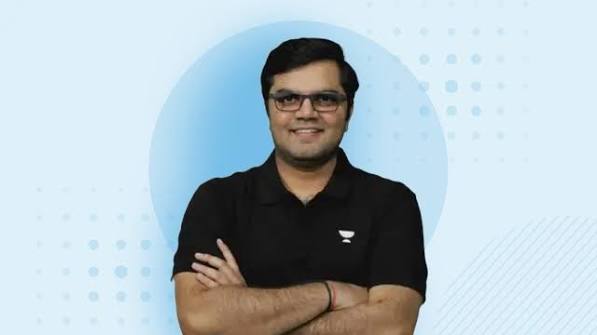
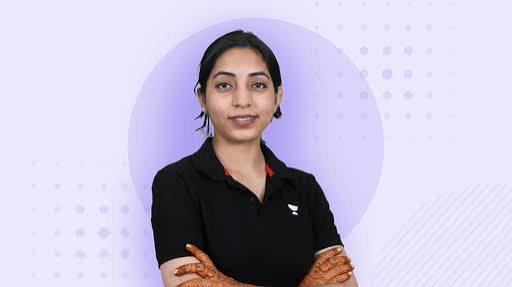
Roshni Mukherjee: The Science and Maths Educator Behind LearnoHub

0
Roshni Mukherjee
Roshni Mukherjee

A student who does not understand a chapter in class often needs something simple: another explanation, time to pause, and a chance to try the question again. Online lessons can provide that flexibility, but their value depends on how clearly they teach the subject and whether students can move from watching to practising.

Roshni Mukherjee’s work is closely associated with that kind of learning. She is a LearnoHub educator who began teaching on YouTube when the project was known as ExamFear Education. Today, LearnoHub offers lessons and study resources across several subjects and class levels. Her story is therefore also the story of how an early collection of educational videos developed into a broader learning platform.

This article focuses on her documented teaching work and the resources students can use. Readers looking for a wider account of her earlier career can also read The Educators Journey’s previous profile of Roshni Mukherjee and ExamFear Education.

Roshni Mukherjee’s Role at LearnoHub

LearnoHub identifies Mukherjee as one of its educators and credits her with creating more than 5,000 video lessons on subjects taught across Classes 6 to 12. Its website says she began teaching on YouTube in 2011 and describes her interest in making education accessible. Those are the platform’s statements about her contribution; they should not be read as a claim that she personally teaches every lesson LearnoHub now publishes.

That distinction matters. LearnoHub’s About Us page describes a team of people involved in teaching and lists lessons in Physics, Mathematics, Biology, Chemistry, English and Social Science. Mukherjee has a substantial documented place in the platform’s history, while its present collection is the work of a wider educational operation.

For a student, the practical question is less about who recorded every video and more about whether a particular lesson explains the right topic at the right level. For a profile of an educator, however, it is important to keep her individual work and the platform’s full catalogue separate.

From ExamFear Education to LearnoHub

ExamFear Education is the earlier name associated with LearnoHub. The connection appears on LearnoHub lesson pages, which describe the platform as formerly called ExamFear Education. LearnoHub’s account of Mukherjee’s work also places her YouTube teaching at the beginning of that development.

The name ExamFear Education captured a familiar problem: many students approach Science and Maths with anxiety before they begin the chapter. An explanation they can replay may help them return to a difficult idea without the pressure of keeping up with a live class. That is a possible benefit of the format, rather than a measured outcome for every student.

As LearnoHub developed, the offering grew beyond videos. Its website now brings together lessons, revision notes, NCERT solutions, online tests, daily practice problems, sample papers and previous-year papers. The platform presents these as parts of a learning sequence: understand a concept, practise it, and ask questions when something remains unclear.

The change from ExamFear Education to LearnoHub is useful context for anyone searching for Mukherjee’s older lessons. A video bearing the earlier name and a resource on the current website may belong to the same educational project. Students should still check the class, chapter and syllabus shown on each resource before using it.

How the Science Resources Serve Learners

Science becomes difficult when students remember a definition but cannot explain the idea behind it. A learner may be able to repeat Newton’s laws, for example, yet struggle to identify the forces in a new question. In Biology, a familiar diagram may seem clear until the student has to describe a process in their own words.

LearnoHub organises Science resources by class and subject, with material covering areas such as Physics, Chemistry and Biology. Its Class 9 listings include topics such as motion, force, sound, atoms and molecules, and the fundamental unit of life. Class 10 listings include electricity, chemical reactions, life processes and heredity. These examples show the range of the platform’s resources; they do not establish that Mukherjee personally presents each one.

A way to use a Science video effectively

A useful first step is to identify the exact point of confusion. “I do not understand Physics” is too broad to guide a study session. “I cannot tell mass and weight apart” gives the student a question to carry into the lesson.

The student can then watch the relevant explanation with a notebook open, pausing to write the idea in their own words. Afterward, they should try a textbook question without following the video step by step. If the answer is wrong, the mistake shows what to revisit. If it is right, the student can test whether they could explain why it is right.

This approach treats a video as one part of learning, alongside school teaching, reading and practice. It also makes repeated viewing purposeful: the student returns to a specific concept instead of replaying a whole chapter without knowing what to look for.

What LearnoHub Offers Maths Students

Maths often exposes a gap between recognising a method and using it independently. A worked example may look straightforward while the teacher is solving it. A slightly different question can reveal whether the learner understands the steps or has only followed them.

LearnoHub provides Mathematics lessons and question-based resources across multiple class levels. Its Class 9 NCERT solutions, for instance, include a Polynomials section organised around textbook exercises. Its wider listings cover school topics such as linear equations, geometry, trigonometry and statistics, with additional material for students exploring later classes and entrance-exam subjects.

For a student working through Polynomials, the most productive order might be to review the meaning of a term or zero, attempt a textbook problem, and then compare the reasoning with a solution. Looking at the answer first can settle an immediate doubt, but attempting the question first gives the student better evidence of what they understand.

Parents can help here without needing to teach the chapter themselves. They can ask a child to explain one solved problem aloud or show where a mistake happened. A clear explanation in the child’s own words usually reveals more than the number of videos completed.

Students interested in how Mathematics educators approach different audiences can also read The Educators Journey’s profile of Nishant Vora’s JEE Mathematics teaching. His exam-focused context differs from LearnoHub’s wider school-level resources, which makes the comparison useful when choosing material for a particular learning goal.

The Value of Learning Beyond the Video

One feature of LearnoHub’s development is the connection between explanation and follow-up work. The website directs students from videos towards notes and NCERT solutions, then towards tests, practice problems, sample papers and past questions. Its listed “Ask Questions” option gives students another route when a doubt remains. Availability and suitability can vary by class and topic, so learners should check the specific chapter they need.

The platform’s official LearnoHub Class 11 and 12 YouTube channel is one way students can explore its video lessons. A student searching there should look for the subject, class and chapter in the lesson title, then check that the material matches the textbook or exam syllabus they are following.

That check is especially helpful when an older video remains useful for understanding a concept but the current textbook presents the chapter differently. The explanation may still clarify an idea; the student should use the current syllabus and assigned text to decide what to prepare for an exam.

None of these resources removes the need for active study. Watching can introduce a method, while solving a fresh question tests whether the method has been learned. Notes can make revision quicker, but they work best after the student has understood the underlying lesson.

What Students and Parents Can Take from Her Work

Mukherjee’s documented contribution shows how sustained teaching through video can give learners another point of entry into a subject. LearnoHub says she created thousands of lessons, and its current resources show how video teaching can sit within a larger set of study tools. The lesson for students is practical: use the explanation that resolves a doubt, then confirm understanding through independent work.

For parents, the most helpful question may be, “What can you solve after watching?” A child who finishes a lesson but cannot answer a related question may need a slower explanation, a review of an earlier concept or help from a teacher. Progress is easier to judge through what the student can explain and apply than through viewing time alone.

It is also worth allowing students to learn at different speeds. One learner may need to revisit a Science diagram; another may understand the concept quickly but require more Maths practice. Resources that can be paused and revisited offer room for both, provided the student uses them with a clear goal.

Conclusion

Roshni Mukherjee is a documented LearnoHub educator whose YouTube teaching connects the platform’s ExamFear Education beginnings to its present collection of learning resources. Her contribution is significant in its own right, while LearnoHub’s full Science and Maths catalogue represents a broader team and platform.

For students, the most useful takeaway is straightforward: choose a lesson that matches the current chapter, identify the concept it helps explain, and test that understanding with a question afterward. That is where an accessible explanation becomes learning they can use.


Ashu Ghai: The Science Educator Behind Science and Fun on YouTube

0
Ashu Ghai:
Ashu Ghai:

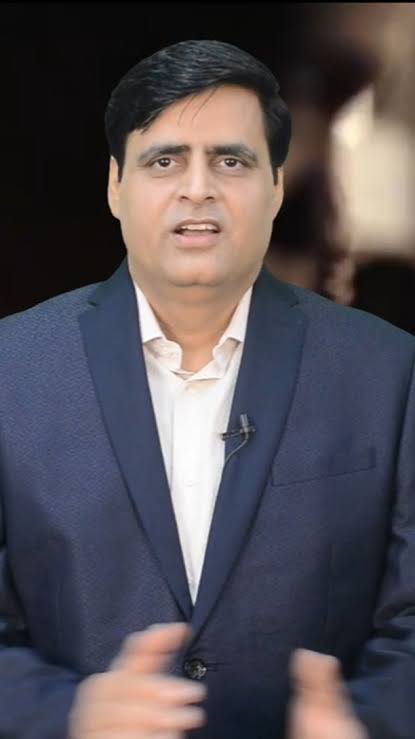
A student who searches for Ashu Ghai is likely looking for a way to understand a science chapter, revise before an exam, or see a concept explained beyond the textbook. His name appears on lessons published by Science and Fun, including Class 10 videos on chemical reactions and magnetism. The platform also points learners towards science content for other school grades.

Ashu Ghai describes himself publicly as an educator associated with Science and Fun. That connection is visible in the lessons themselves: videos published under the Science and Fun Education name identify him as “Ashu Sir.” This article looks at that documented teaching work, the kinds of videos students can find, and how to use them alongside a regular study routine.

Who Is Ashu Ghai?

Ashu Ghai is a science educator associated with Science and Fun’s online lessons. His public profile describes him as an educator and lists a leadership role at Science and Fun. More directly useful to students, the platform’s YouTube listings show him teaching named school science chapters. Those published lessons establish his teaching role without relying on claims about his degree, years of experience, or students’ results.

The Educators Journey has previously covered his broader appeal in its earlier article on Ashu Ghai and Science and Fun. Here, the more practical question is what a learner will encounter when searching for his lessons: chapter explanations, revision videos, and lessons presented with experiments.

It also helps to keep the educator and the platform distinct. A Science and Fun video featuring Ashu Ghai is evidence of a lesson he teaches; it does not mean every video across the platform is taught by him. Students should check the title and presenter of a particular lesson before adding it to their study plan.

Ashu Ghai and Science and Fun on YouTube

Science and Fun maintains a YouTube channel identified as its official channel. Its app listing also names channels for different grade groups, indicating that learners may encounter the Science and Fun name in more than one YouTube search result. For someone looking for Ashu Ghai specifically, the useful starting point is the lesson title and the channel that published it.

The available videos show two familiar needs in school science study. A longer lesson can help a student work through a chapter; a shorter revision video can help them recall its main ideas later. For example, Science and Fun has published both a Class 10 lesson on Chemical Reactions and Equations presented as a one-shot lesson with a live experiment and a shorter video on the same chapter. Both identify Ashu Sir in their titles.

That range matters because students do not always need the same kind of help. Someone meeting a chapter for the first time may need time to follow its terms and examples. Someone who has already studied it may want a focused recap. Choosing the right video for the task is more useful than simply watching the shortest available lesson.

Chemistry lessons with a chapter focus

The published Chemical Reactions and Equations lesson gives students a concrete starting point for Class 10 chemistry. Its title identifies both the chapter and a live experiment. Another published lesson covers Acids, Bases and Salts as a Class 10 one-shot session. These titles show the channel offering chapter-based explanations on topics students also meet in their school materials.

A sensible way to use such a lesson is to read the chapter first and mark the terms that remain unclear. While watching, the student can pause at an explanation, write down what changed in their understanding, and then return to the textbook’s definitions, equations, and exercises. A video can make a reaction easier to picture; the student still has to learn how to describe and apply it accurately.

Physics through explanation and demonstration

Science and Fun has also published a Class 10 lesson titled Magnetic Effect of Electric Current, presented as a one-shot lesson with a live experiment by Ashu Sir. The title shows an attempt to connect a physics chapter with something students can observe, rather than presenting it only as text on a page.

Observation is a useful first step, but it is only part of learning physics. After watching a demonstration, a student should be able to identify the conditions, explain the result in the chapter’s language, and answer a new question about the same principle. If they cannot, the video has shown them the idea but they need another pass through the explanation and practice.

Why Practical Explanations Can Help

Science textbooks often move quickly from an observation to a definition or rule. A demonstration gives students a moment to ask what happened before they study the formal explanation. In chemistry, that might mean watching for a visible change and then checking how the chapter describes it. In physics, it might mean noticing how an arrangement relates to the effect being discussed.

The value lies in connecting the observation to the underlying concept. An experiment shown on screen does not, by itself, prove that a student understands the chapter. The learner has to ask: What was changed? What was observed? Which explanation accounts for it? Would the same principle apply if the question were worded differently?

Those questions make practical videos useful even when students cannot perform the activity themselves. They can study the demonstration, test their explanation against the textbook, and discuss remaining doubts with a teacher. They should not try to recreate an experiment simply because they saw it online; any hands-on activity needs appropriate supervision and safety guidance.

This approach is relevant beyond one educator’s channel. Readers interested in how another online teacher presents school science can explore The Educators Journey’s profile of Roshni Mukherjee and ExamFear Education. The comparison is useful for considering how different lesson formats fit a student’s needs, without assuming that one style works equally well for everyone.

How Students Can Use Science and Fun Effectively

YouTube works best when a student arrives with a specific purpose. Searching “science” can lead to an endless stream of videos; searching for the exact chapter and the concept causing trouble gives the study session a clear endpoint.

Start with the current syllabus

Before choosing a lesson, check the class, subject, chapter, and board or school requirements shown in the video title. Science and Fun’s platform lists content for several school grades, so a familiar topic name alone may not identify the right level. A student preparing for a school test should prioritise the version that matches what their teacher has assigned.

Open the textbook chapter and identify what you already know. If only one section is confusing, look for help with that section first. If the whole chapter feels unfamiliar, begin with a fuller explanation and save a short revision video for later.

Watch actively, then work without the video

Pause when an important example appears. Before the teacher explains the next step, try to predict it. Keep notes brief: write a key term, the explanation in your own words, and one question you still have.

After the lesson, close YouTube and attempt the textbook questions. For a chemistry chapter, check whether you can explain the observations and write the required answers. For a physics chapter, try a fresh diagram or question without copying what appeared on screen. This step reveals whether you understood the idea or merely recognised it while someone else explained it.

If an answer is wrong, identify the precise gap. Did you misunderstand the concept, forget a definition, or misread the question? Revisit only the relevant part of the lesson, then try another problem. Rewatching an entire video is rarely necessary when the difficulty is confined to one point.

Bring unresolved doubts back to class

A YouTube lesson can be paused and replayed; a classroom teacher can respond to the particular question a student is struggling to ask. Use both strengths. Bring a marked textbook passage, a failed practice question, or a specific observation from the video to your teacher.

Parents can support this routine by asking a child to explain a concept after viewing, rather than counting videos watched as proof of progress. A short explanation in the student’s own words is more informative than a completed playlist.

What the Channel Can and Cannot Do

Science and Fun’s published lessons offer students an accessible way to revisit science topics. The chapter titles, revision formats, and experiment-led presentations make it possible to choose a video for a particular learning need. The platform’s official app listing describes additional material for Classes 9–12, including concept lectures and practice resources; those are the platform’s descriptions of what it offers, rather than independent measures of learning outcomes.

No channel can establish a student’s understanding by itself. Videos may explain a topic clearly, but the student still needs to check the current syllabus, read the assigned text, solve questions, and correct mistakes. That balance leaves room for YouTube to do what it does well: provide another explanation when the first one has not quite made sense.

Conclusion

Ashu Ghai’s documented work with Science and Fun includes school science lessons on YouTube, among them chapter-based Class 10 chemistry and physics videos. Their practical and revision-oriented formats give students different ways into a topic. The strongest way to use them is simple: choose a relevant lesson, question what you observe, return to the textbook, and test your understanding through practice.

FAQs

Is Ashu Ghai associated with Science and Fun?

Yes. His public educator profile identifies him with Science and Fun, and the platform has published science lessons naming him as Ashu Sir.

What subjects can I find Ashu Ghai teaching on YouTube?

The published lessons checked for this article include Class 10 chemistry topics such as Chemical Reactions and Equations and Acids, Bases and Salts, as well as the physics topic Magnetic Effect of Electric Current.

Does Science and Fun only have long lessons?

No. Published examples include a longer Chemical Reactions and Equations lesson presented with a live experiment and a shorter revision video on the same chapter. Check a video’s title and length to choose the format you need.

Can I prepare for a science exam using only YouTube videos?

Videos can help explain and revise concepts, but preparation also requires the prescribed textbook, classroom guidance, and independent question practice. Use a video to resolve a specific difficulty, then check what you can answer without it.

Nishant Vora: Mathematics Educator from Ahmedabad | Unacademy & YouTube Teacher

0
Nishant Vora
Nishant Vora

Introduction

Nishant Vora is a Mathematics educator whose name is familiar to many students preparing for JEE Main and JEE Advanced through online learning. His Mathematics lectures have appeared across Unacademy’s IIT JEE ecosystem, including long-form classes, revision sessions, previous-year-question discussions, and the popular BounceBack-style one-shot format.

Students searching for Nishant Vora Mathematics classes will also find his teaching connected with Vora Classes, where he continues to be listed as a Mathematics faculty member for JEE preparation. His publicly available work therefore spans both large online education platforms and educator-led learning resources.

This profile focuses only on information that can be supported by publicly available sources, while avoiding unsupported claims about rankings, results, or personal background.

Who Is Nishant Vora?

Nishant Vora is a Mathematics educator primarily associated with IIT JEE preparation. His public professional profile lists IIT Patna under his education, while official course pages from Vora Classes also identify him with IIT Patna and describe him as an experienced Mathematics faculty member.

His teaching record available online includes Mathematics classes for JEE Main and Advanced aspirants. Archived Unacademy pages show courses and sessions covering areas such as calculus, quadratic equations, complex numbers, vectors, three-dimensional geometry, sequence and series, relations and functions, and previous-year questions.

Students researching other teachers alongside Nishant Vora may also find a [Related Mathematics Educator Profile – Internal Link] useful for understanding different approaches to competitive-exam Mathematics.

Nishant Vora’s Connection with Ahmedabad

Although the title of this article refers to Ahmedabad, reliable public sources reviewed for this profile do not clearly establish Ahmedabad as Nishant Vora’s birthplace, hometown, or current residence.

His professional LinkedIn profile associates his current work with Vora Classes in Noida and lists IIT Patna in his educational background. Vora Classes’ current course information also provides a Greater Noida campus address.

For that reason, it would not be accurate to describe him definitively as being “from Ahmedabad” without stronger primary-source confirmation. Students should distinguish between a location appearing in search queries or third-party references and a location that has been verified through an educator’s official profile.

Career as a Mathematics Educator

Nishant Vora’s publicly documented career is strongly connected with competitive-exam Mathematics, particularly JEE preparation.

Vora Classes’ JEE 2027 course page identifies him as its Mathematics faculty member and states that he has more than 12 years of teaching experience. Since this information comes from the platform with which he is currently associated, it provides a useful description of his professional teaching background.

His older Unacademy material demonstrates several years of online teaching activity. For example, Unacademy has archived Nishant Vora Mathematics classes from 2020 onward, including a detailed course on quadratic equations and later classes covering calculus, revision, mock tests, and JEE-focused problem solving.

Today, Vora Classes also lists him as Mathematics faculty in its JEE courses, with learning formats that include detailed lectures, practice sheets, previous-year questions, tests, and revision-oriented preparation.

Nishant Vora and Unacademy

The Nishant Vora Unacademy association is well documented through archived course pages and recorded classes.

His official Unacademy educator profile currently states that he is no longer associated with Unacademy, while also keeping his earlier courses, quizzes, and classes accessible to learners. The profile categorizes him under Mathematics and preserves sessions on topics such as complex numbers, applications of derivatives, algebra, conic sections, circles, binomial theorem, and JEE Main mock tests.

Students who want to review that archived material can visit the official Nishant Vora Unacademy educator profile.

His Unacademy history also includes the Manzil Mathematics course and JEE-focused calculus lessons. Course descriptions indicate that classes were generally delivered in Hindi, with English notes provided for learners.

This makes it more accurate to describe Nishant Vora as a former Unacademy Mathematics educator, rather than suggesting that he is currently teaching there.

Nishant Vora’s YouTube Teaching Presence

The Nishant Vora YouTube presence includes a substantial collection of JEE Mathematics lectures published through education channels associated with Unacademy and, more recently, Vora Classes.

One example is an Unacademy JEE lecture on continuity published in June 2021. The session covers concepts, important questions, and JEE-oriented problem solving. Unacademy’s description also identifies Nishant Vora as an IIT Patna alumnus.

His lectures were also published through the Unacademy Atoms ecosystem, including one-shot sessions such as Mathematical Reasoning for JEE preparation.

Vora Classes subsequently became another important home for his video content. Students can view a Nishant Vora JEE Mathematics lesson on the official Vora Classes YouTube channel, where exam-focused Mathematics videos and revision resources have been published.

Mathematics Topics Taught by Nishant Vora

Public course listings provide clear evidence of the Mathematics areas associated with Nishant Vora’s teaching.

His Unacademy catalogue includes complex numbers, algebra, conic sections, circles, binomial theorem, sequence and series, sets and relations, calculus, integration, vectors, 3D geometry, permutations and combinations, statistics, matrices, probability, quadratic equations, and applications of derivatives.

Unacademy also published a BounceBack 2.0 collection containing sessions on sets and relations, relations and functions, inequalities, and matrices.

These examples show that his publicly available teaching material covers several major sections of the JEE Mathematics syllabus rather than being restricted to a single chapter or branch of Mathematics.

His Teaching Approach

A review of publicly available classes shows a teaching format built around concept explanation followed by question solving.

For example, his Unacademy complex-numbers revision class explicitly combines theory with questions, while his vectors and 3D revision session includes both full-theory revision and problem practice. His Sets and Relations session is specifically structured around previous-year questions.

Longer one-shot and marathon sessions are another visible part of his teaching format. Such classes can help students revise a complete chapter within a structured session, although learners still need independent practice after watching lectures.

His current Vora Classes courses similarly combine detailed lectures with DPPs, practice sheets, PYQs, tests, and dedicated practice sessions.

How His Content May Help JEE Aspirants

For JEE aspirants, Mathematics preparation requires more than simply watching lectures. Students need to understand concepts, practise different question patterns, analyse mistakes, and return to difficult chapters repeatedly.

Nishant Vora JEE Mathematics resources can fit into this process in several ways. Detailed lectures can support first-time learning, while one-shot or marathon classes may be more suitable for revision. PYQ sessions can help students understand how concepts have appeared in actual examination-style questions.

A student building a complete preparation system should combine lectures with a structured schedule, mock tests, revision, and regular problem solving. A [JEE Preparation Guide – Internal Link] can be useful for organizing these elements into a realistic study plan.

Online Learning Through Unacademy and YouTube

Structured learning platforms and YouTube serve different purposes.

A structured course generally gives students an organized syllabus, sequence of classes, practice material, testing, and a defined learning path. Archived Nishant Vora Unacademy courses show this format through scheduled lessons, downloadable notes, and topic-based course structures.

YouTube is more flexible. Students can search directly for a chapter, revision lecture, one-shot session, or problem-solving video. This can be particularly useful when revising a weak topic or looking for an alternative explanation.

However, depending entirely on isolated videos can make preparation fragmented. Students using free video resources should maintain their own syllabus tracker and question-practice schedule.

What Students Should Consider When Choosing a Mathematics Educator

No Mathematics teacher will automatically be the right choice for every JEE aspirant. Students have different levels of preparation, learning speeds, and academic strengths.

Before selecting a teacher, watch a few complete classes and evaluate whether the explanations are understandable without constant dependence on solutions. Check whether the course covers the required syllabus depth, provides enough questions, includes JEE Main and Advanced-level practice where needed, and supports regular revision.

Students should also consider doubt-solving support, class length, language, pace, study material, and whether they can consistently follow the teacher’s learning sequence.

The most useful educator is ultimately one whose classes support consistent study and independent problem solving.

Final Thoughts

Nishant Vora has a well-documented presence as a Mathematics educator in the JEE preparation space. His earlier association with Unacademy produced a substantial archive of Mathematics courses, one-shot lectures, revision sessions, and problem-solving classes, while current Vora Classes material continues to list him as Mathematics faculty for JEE preparation.

His publicly available content covers a broad range of JEE Mathematics topics and includes both concept-oriented and revision-focused formats.

At the same time, the available reliable sources do not clearly verify the Ahmedabad connection stated in this article’s title. Students and parents researching Nishant Vora Mathematics teacher information should therefore rely on official educator, course, and platform pages for personal or professional details rather than unverified profile websites.

Frequently Asked Questions

1. Who is Nishant Vora?

Nishant Vora is a Mathematics educator associated with JEE Main and JEE Advanced preparation. Public records show an earlier teaching presence on Unacademy and a current role as Mathematics faculty with Vora Classes. His professional profile and current course material also associate his education with IIT Patna.

2. Does Nishant Vora teach Mathematics?

Yes. Unacademy’s archived educator profile categorizes Nishant Vora under Mathematics, and numerous course pages show him teaching topics such as calculus, algebra, complex numbers, vectors, coordinate geometry-related chapters, sequence and series, and other JEE Mathematics areas. Vora Classes also currently lists him as Mathematics faculty.

3. Is Nishant Vora associated with Unacademy?

Nishant Vora was associated with Unacademy and taught Mathematics for IIT JEE aspirants on the platform. However, his current Unacademy profile explicitly states that he is no longer associated with Unacademy. His older courses, free classes, and quizzes remain accessible through the platform.

4. Does Nishant Vora teach JEE Mathematics?

Yes. Multiple official Unacademy and Vora Classes course pages identify his Mathematics teaching specifically with JEE Main and JEE Advanced preparation. His recorded courses include chapter teaching, revision, previous-year questions, mock-test discussions, and full JEE syllabus preparation.

5. Does Nishant Vora have Mathematics lectures on YouTube?

Yes. Nishant Vora appears in numerous JEE Mathematics videos published through Unacademy-related YouTube channels and Vora Classes. These include complete chapter sessions, one-shot lectures, revision videos, mathematical reasoning classes, continuity lessons, and exam-oriented Mathematics discussions.

6. What Mathematics topics does Nishant Vora teach?

Verified course pages show Nishant Vora teaching areas including algebra, calculus, complex numbers, quadratic equations, sequence and series, vectors, 3D geometry, relations and functions, matrices, probability, permutations and combinations, integration, circles, conic sections, and applications of derivatives.

7. Where can students find Nishant Vora’s classes?

Students can still access many of his older recorded classes through his archived Unacademy profile and Unacademy-related video content. For more recent teaching resources, current Vora Classes course pages and its official YouTube presence provide Mathematics lessons and JEE preparation material featuring Nishant Vora.

Purnima Kaul: Mathematics Educator from Bengaluru | Unacademy JEE Teacher & Mentor

0
Purnima Kaul
Purnima Kaul

For students preparing for JEE Main and JEE Advanced, Mathematics is often a subject where conceptual understanding and consistent problem-solving have to work together. A strong foundation is important, but students also need exposure to different question patterns, time-bound practice, and methods for connecting multiple concepts within a single problem.

Purnima Kaul is a Mathematics educator whose publicly available teaching record includes JEE-focused courses and classes on Unacademy. Her archived Unacademy content covers topics ranging from algebra and calculus to vectors, three-dimensional geometry, probability, and coordinate geometry. Importantly, her current Unacademy profile states that she is no longer associated with Unacademy, so her connection with the platform should be understood historically rather than as a current teaching position.

Public professional information also supports a Bengaluru connection. A LinkedIn profile matching her education and professional background lists Bengaluru, Karnataka, India as her location and identifies the Indian Institute of Technology (Banaras Hindu University), Varanasi in her education history.

Who Is Purnima Kaul?

Purnima Kaul is known in the JEE preparation space for teaching Mathematics. Her archived Unacademy educator pages identify her under Mathematics and contain classes created for students preparing for JEE Main, JEE Advanced, and other engineering entrance examinations.

Her public teaching material shows involvement with both concept-oriented lessons and problem-solving sessions. Topics visible in her Unacademy course history include quadratic equations, sequences and series, binomial theorem, permutations and combinations, probability, matrices, determinants, limits, functions, calculus, vectors, and 3D geometry.

For students researching different JEE faculty members, [Relevant JEE Educator Article – Internal Link] can be used here to provide broader context about choosing an educator based on learning requirements rather than popularity alone.

Educational and Professional Background

Publicly indexed professional information identifies the Indian Institute of Technology (Banaras Hindu University), Varanasi in Purnima Kaul’s education history, covering the period from 2009 to 2014. Archived Unacademy teaching material further describes her credentials as B.Tech and M.Tech from IIT-BHU in Mathematics and Computing.

Because educator profiles can change over time, current professional roles should be distinguished from historical information. Public search results reviewed for this article do not provide enough primary-source detail to responsibly present every past employer, designation, student result, or career milestone as a confirmed fact.

This distinction matters in educator-profile content. Students and parents should rely on current official profiles when checking whether a teacher is presently associated with a particular coaching institute or online platform.

Purnima Kaul’s Association with Unacademy

Purnima Kaul had a substantial body of JEE Mathematics content on Unacademy. Her archived batch page lists multiple JEE programs, including the Foundation Batch for JEE Main and Advanced 2025, Yalgaar batches, Udaan batches for JEE 2024, Antim Yudh, Maha Yuddh, and other programs.

One Mathematics course running from February to March 2023 included lessons on quadratic equations, sequences and series, binomial theorem, permutations and combinations, probability, matrices, and determinants. Other archived classes covered subjects such as limits, complex numbers, functions, continuity, differentiation, and applications of derivatives.

Students looking for the archived material can refer to Purnima Kaul’s official Unacademy educator profile.

However, the status displayed on that profile is particularly important: Unacademy currently states that the educator is no longer associated with Unacademy, while previous courses and quizzes remain accessible. Therefore, describing her as a current Unacademy JEE educator would be inaccurate based on the available evidence.

Role as a JEE Mathematics Educator

The available course record indicates that her Mathematics teaching covered a broad portion of the JEE syllabus.

For example, an official Unacademy brochure for a JEE 2024 dropper batch lists her against Sets, Relations, Functions, Inverse Trigonometric Functions, Limits, Continuity and Differentiability, Applications of Derivatives, Indefinite and Definite Integrals, Differential Equations, Area Under Curves, Vectors, 3D Geometry, Statistics, and Mathematical Reasoning.

Another Unacademy batch document lists Mathematics topics including sets, functions, logarithms, trigonometry, quadratic equations, sequences and series, straight lines, circles, binomial theorem, permutations and combinations, complex numbers, parabola, ellipse, hyperbola, and statistics.

This breadth is relevant for JEE aspirants because Mathematics preparation is cumulative. Weakness in functions, for example, can later affect calculus, while algebraic manipulation frequently appears inside coordinate geometry and other advanced problems.

Mathematics and JEE Preparation

JEE Mathematics is not simply about remembering formulas. Students need to understand why a method works, recognize the structure of a problem, and decide which concept or combination of concepts should be applied.

The official JEE Advanced information brochure states that its questions are designed to test comprehension, reasoning, and analytical ability. It also confirms that Mathematics forms one of the three sections in each JEE Advanced paper.

That makes regular problem-solving especially important. A student may understand differentiation in isolation but still struggle when derivatives are combined with functions, graphs, inequalities, or coordinate geometry.

A structured preparation plan should therefore move from concepts to standard problems, then previous-year questions, mixed problems, timed practice, and finally error analysis.

Students who need a broader preparation framework can also refer to [Related Mathematics/JEE Article – Internal Link].

Teaching Approach Visible in Archived Classes

It is difficult to reduce an educator’s complete teaching philosophy to a few publicly indexed pages. However, Purnima Kaul’s archived Unacademy material does provide some evidence about the structure of her classes.

Several classes combine concept coverage with practice. Her 2023 Mathematics course, for instance, separated certain chapters into basics and practice sessions, while other archived content specifically focused on previous-year questions and JEE Main or Advanced-level problem solving.

Her archived sessions were also delivered in Hindi or a Hindi-English format in several cases, with English notes mentioned on course pages.

For learners, the practical lesson is that watching explanations should be only one part of preparation. Mathematics improves when concepts are immediately followed by independent problem solving.

Important Mathematics Areas for JEE Aspirants

Students should base their preparation on the syllabus applicable to their examination year rather than relying solely on old course playlists.

Core areas commonly encountered across JEE Mathematics preparation include algebra, calculus, coordinate geometry, vectors and 3D geometry, matrices and determinants, probability, sequences and series, functions, and trigonometry. The exact syllabus should always be checked against the official examination documents for the relevant year.

For current JEE Main notices, information bulletins, results, and examination updates, students should use the official JEE Main website maintained by the National Testing Agency rather than depending on unofficial exam-information websites.

Online Learning and the Role of Educators

Online education has made it possible for JEE aspirants to access lectures, revision sessions, practice classes, and recorded courses regardless of where they study.

But access to more content does not automatically lead to better preparation. Students can easily spend too much time switching between educators and collecting resources without completing enough questions themselves.

A useful Mathematics educator should fit the student’s current level. Someone struggling with fundamentals may require slower concept development and carefully graded examples. A student already comfortable with the syllabus may benefit more from previous-year questions, advanced problem sets, revision, and mock-test analysis.

The goal is not to follow the largest possible number of teachers. It is to build a learning system that produces measurable improvement.

Bengaluru and the JEE Preparation Ecosystem

The Bengaluru reference in this article is supported by a publicly indexed professional profile that lists Purnima Kaul in Bengaluru, Karnataka. However, the sources reviewed do not establish that every stage of her teaching career took place in Bengaluru, so it would be inappropriate to make broader claims about her classroom teaching history in the city.

More generally, location has become less restrictive for JEE preparation because online platforms allow students to learn from educators based in different cities. Students can combine online instruction with school studies, self-practice, test series, and offline support where necessary.

How to Approach JEE Mathematics Effectively

A strong Mathematics routine begins with clarity rather than speed. Students should first understand definitions, formulas, standard results, and the reasoning behind commonly used methods.

After completing a concept, solve questions without looking at the solution. When an answer is wrong, identify whether the problem came from a conceptual gap, calculation mistake, incorrect interpretation, or poor choice of method.

Previous-year questions are especially useful because they help students understand how familiar concepts are converted into examination problems. Timed tests should be introduced once sufficient topic-level practice has been completed.

Maintaining a short error notebook can also be valuable. Instead of rewriting complete solutions, record the concept missed, the mistake made, and the correct approach. Revisiting these errors regularly can make revision more targeted.

Frequently Asked Questions About Purnima Kaul

Who is Purnima Kaul?

Purnima Kaul is a Mathematics educator with publicly available JEE-focused teaching content. Archived Unacademy pages show that she taught Mathematics courses and classes aimed at JEE Main and JEE Advanced aspirants.

Is Purnima Kaul currently associated with Unacademy?

No, according to her current Unacademy profile. The platform states that she is no longer associated with Unacademy, although her previous courses and quizzes remain accessible.

Did Purnima Kaul teach Mathematics for JEE?

Yes. Official archived Unacademy pages identify her as a Mathematics educator and show JEE Main and JEE Advanced-focused Mathematics courses and classes.

What Mathematics topics did she teach?

Archived course records include quadratic equations, sequences and series, functions, limits, calculus, matrices, determinants, probability, complex numbers, vectors, 3D geometry, coordinate geometry, trigonometry, and other JEE Mathematics topics.

Is Purnima Kaul connected with Bengaluru?

A publicly indexed professional LinkedIn profile matching her education and career context lists Bengaluru, Karnataka, India. However, this should not be interpreted as evidence that her entire teaching career has been based in Bengaluru.

Where can students find her older educational content?

Her archived Unacademy educator pages still contain previous courses, batches, and classes. Students should check the date of individual resources because older lessons may have been created for previous JEE examination cycles.

How should students prepare for JEE Mathematics?

Students should combine conceptual study with regular question practice, previous-year questions, revision, timed tests, and detailed analysis of mistakes. They should also check the official syllabus for their examination year before planning chapter-wise preparation.

Conclusion

Purnima Kaul’s publicly documented teaching history establishes her as a Mathematics educator who created and taught JEE-oriented content, including courses covering a wide range of Mathematics topics. Her archived Unacademy record includes both concept-focused lessons and problem-solving sessions for engineering entrance preparation.

At the same time, current information needs to be represented accurately. Her Unacademy profile now explicitly states that she is no longer associated with the platform, so the Unacademy connection is historical rather than a current role.

For JEE aspirants, the broader takeaway is straightforward: Mathematics improves through a combination of clear concepts, structured practice, previous-year questions, revision, and careful analysis of mistakes. An educator can provide direction and explanation, but consistent independent problem solving remains central to long-term progress.


Shishir Mittal: Chemistry Educator and His Kota Connection

0
Shishir Mittal
Shishir Mittal

Shishir Mittal, also known as SM Sir, is a Chemistry educator associated with competitive examination preparation and Kota’s coaching community. Institutional records document his work in Chemistry teaching and academic leadership, while publicly available resources connect his teaching with IIT-JEE preparation and Vyas Edification. His professional background includes past associations with Bansal Classes and Resonance.

For students and parents researching his name, the useful questions go beyond recognition: What does the available evidence establish about his background? How is he connected with Kota? And how should a student assess the relevance of his learning resources?

Answering those questions requires separating documented professional history from promotional descriptions. It also means distinguishing an older institutional association from a current teaching appointment.

Shishir Mittal’s Professional Background

An institutional profile on Resonance’s academic leadership and information page lists Shishir Mittal’s qualification as a B.Tech. in Chemical Engineering from IIT Bombay, with 1998 recorded as the graduation year. The same page identifies him as Executive President for Academic Training and Development and Head of Chemistry.

That record provides evidence of his academic background and a leadership role involving Chemistry education. However, it should be read as a historical institutional record rather than automatic confirmation of his present employment.

This distinction is supported by his Vyas Edification course profile, which explicitly describes his executive and departmental responsibilities at Resonance as former roles. It also identifies him as a founding Chemistry faculty member at Bansal Classes, Kota.

Together, these sources establish a professional background involving subject teaching and academic responsibilities. They do not justify adding an uninterrupted career timeline, precise joining and leaving dates, or personal motivations that the available records do not clearly explain.

For an educator profile, that boundary matters. A documented qualification or appointment is useful information; an assumed story about how or why someone entered teaching is a different kind of claim.

Understanding Shishir Mittal’s Kota Connection

Shishir Mittal’s Kota connection is documented through educational work rather than simply a location attached to his name. His published professional profile connects him with Bansal Classes in Kota, while public teaching material also identifies Vyas Edification with the city.

A June 2020 video published on the Shishir Mittal YouTube channel introduced a daily, five-minute Chemistry series associated with Vyas Edification, Kota. Its description presented the series as a way for IIT-JEE and NEET aspirants to revisit Chemistry concepts in short sessions.

This dated material provides a specific connection between the educator, his subject and the city. It is more informative than an unsupported label suggesting that every stage of his career, or every course bearing his name, belongs to one institution.

Readers exploring the wider regional context can also browse The Educators Journey’s coverage of educators associated with Rajasthan. Such profiles provide additional reading, although each educator’s qualifications and affiliations should be assessed individually.

A Kota association also does not establish someone’s birthplace, permanent residence or current classroom location. For a student considering attendance in person, the relevant details are the actual teaching venue and batch arrangements.

His Documented Chemistry Education Work

The available evidence places Chemistry at the centre of Mittal’s educational work. Alongside the institutional leadership record, a BYJU’S faculty page identifies him as SM Sir and describes his teaching connection with JEE and NEET Chemistry. That page documents an association, but its continued availability alone does not establish an active teaching assignment today.

His name also appears in Chemistry reading recommendations published by Resonance. A ResoNET preparation document lists A Text Book of Physical Chemistry, credited to Shishir Mittal, and an edition of Vogel’s Qualitative Analysis for the JEE credited to G. Svehla and Shishir Mittal.

These references add a publishing dimension to his documented educational work. They show that his name appears in subject resources as well as faculty descriptions, without requiring claims about sales, popularity or examination results.

Students considering a book should still inspect the exact edition. A title appearing in an institutional reading list does not mean every chapter is necessary for every examination or that the book should replace an existing study plan.

For a related subject perspective, The Educators Journey’s profile of Physics educator H. C. Verma offers further reading about an educator associated with science learning and educational books.

Publicly Available Teaching Resources

The Shishir Mittal Chemistry course page on Vyas Edification lists full-subject programmes and individual topic courses. Examples include mole concept, chemical bonding, chemical equilibrium, electrochemistry and organic nomenclature, covering material across Physical, Inorganic and Organic Chemistry.

The page also advertises live IIT-JEE Chemistry programmes labelled for 2027 and 2028. These are published course listings; students should confirm enrolment availability, teaching schedules and access conditions directly before making a purchase.

The earlier five-minute YouTube series represents a different format. Its published description focuses on learning, revising and recalling individual Chemistry concepts through brief videos. That stated purpose should not be confused with evidence that the series provides a complete examination syllabus.

When comparing resources, begin with the learning need. Someone revisiting one difficult concept may need a focused explanation, whereas a student starting a subject requires a coherent sequence of lessons and practice.

A resource catalogue helps identify what is offered. It cannot, by itself, establish how well a particular student will understand the explanations or whether the workload fits their timetable.

Past Associations and Current Affiliations

Educator searches often bring together old faculty profiles, recorded lectures and newer course announcements. These sources can all be authentic while referring to different periods of a person’s professional life.

For Mittal, the reviewed evidence supports discussing Bansal Classes and Resonance within his professional background, a documented BYJU’S association, and publicly listed Vyas Edification resources. Those references should retain their individual context rather than being presented as simultaneous current appointments.

The sources reviewed for this article did not establish a current Motion Education faculty appointment. It would therefore be inappropriate to introduce him as a current Motion Education Chemistry teacher.

This is a limit of verification, not a claim that a particular association could never have existed. Current employment requires current evidence, ideally a recent institutional announcement or an educator’s own dated confirmation.

For students, the practical question is who will teach the batch they are considering. Confirm the named instructor, whether lessons are live or recorded, and who handles academic questions after class.

How Students Can Evaluate Chemistry Classes

The following suggestions are general editorial guidance. They are not presented as Shishir Mittal’s teaching methods or personal recommendations.

Watch a complete explanation

Choose a lesson on a topic you partly understand. Follow it from the introduction through the worked examples, noticing whether the explanation makes assumptions clear and connects each step logically.

Afterwards, close the lesson and explain the central idea in your own words. Being able to follow a solution while watching is useful, but independently reconstructing the reasoning offers a more meaningful test.

Attempt unfamiliar questions

Try a small set of related questions without referring immediately to the demonstration. Include at least one problem that changes the conditions or asks for a different application.

If you struggle, identify the reason. The difficulty may involve an unfamiliar concept, a calculation error, missing prerequisite knowledge or uncertainty about how to begin.

Check the structure and support

Ask how the course progresses, which prerequisites it assumes and how much independent practice is expected. Also establish whether questions receive individual replies, group discussion or recorded solutions.

Compare the published coverage with the official syllabus for your target examination and year. A large topic library can be useful without every available lesson being relevant to your immediate goal.

Assess the practical commitment

Before enrolling, clarify access duration, recording availability, device restrictions, payment terms and the refund policy. These details affect whether you can use a programme consistently.

Parents can help by discussing the student’s actual learning experience after a demonstration. A productive conversation asks what became clearer, what remains difficult and whether the proposed schedule leaves enough time for revision.

Frequently Asked Questions

Who is Shishir Mittal?

Shishir Mittal, also called SM Sir, is a Chemistry educator whose documented professional background includes teaching and academic leadership connected with competitive examination preparation. Institutional and course profiles identify past associations with Bansal Classes and Resonance.

What is his educational qualification?

Resonance’s published institutional profile lists a B.Tech. in Chemical Engineering from IIT Bombay, with 1998 given as the graduation year.

How is Shishir Mittal connected with Kota?

His professional profile identifies a Bansal Classes, Kota association. Separately, his publicly available 2020 Chemistry video material connects his teaching with Vyas Edification in Kota.

Is he currently a Chemistry teacher at Motion Education?

A current Motion Education appointment could not be verified from the sources reviewed. Students should seek a recent official confirmation before relying on that description.

Where can students explore his Chemistry teaching?

Publicly available starting points include his YouTube material and the Vyas Edification Chemistry course page. Check the intended examination, publication date, lesson format and current availability before selecting a resource.

Conclusion: Use the Profile as a Starting Point

A researched educator profile can establish background and help students locate relevant resources. Choosing a teacher requires one further step: examining the learning experience itself.

For anyone considering Shishir Mittal’s Chemistry resources, a sensible approach is to watch a substantive lesson, attempt related questions and verify the current course arrangements. Professional history provides context; the student’s ability to understand, practise and make steady progress should guide the final decision.

Jayant Nagda: Physics Educator from Bengaluru | Unacademy JEE Teacher & Mentor

0
Jayant Nagda
Jayant Nagda

Physics is often one of the most demanding parts of JEE preparation. Understanding the theory is only the beginning; students also need to develop the ability to interpret a problem, identify the right principle, connect multiple concepts, and solve questions accurately under exam pressure.

That is why JEE aspirants frequently search for experienced Physics educators whose classes combine conceptual understanding with structured problem-solving. Jayant Nagda is one such educator whose name has appeared prominently in Unacademy’s IIT JEE Physics ecosystem.

His current Unacademy educator profile identifies him as a Physics educator for JEE and states that he has more than 15 years of teaching experience. The profile also lists IIT Bombay, Computer Science and Engineering, and JEE AIR 161 among his academic credentials.

One point needs clarification before going further. Although the requested title describes Jayant Nagda as a Physics educator “from Bengaluru,” the reliable public sources reviewed for this article do not establish Bengaluru as his hometown, permanent residence, or current professional base. Therefore, this article does not present that geographic association as a confirmed biographical fact.

Who Is Jayant Nagda?

Jayant Nagda is a Physics educator associated with JEE preparation and online education through Unacademy.

His official Unacademy profile currently describes him as a Physics educator with 15+ years of JEE teaching experience. It also identifies him as an IIT Bombay alumnus from Computer Science and Engineering and mentions his JEE All India Rank of 161.

For students researching a Jayant Nagda Physics teacher profile, the most important verified point is his long-standing focus on Physics for engineering entrance examination preparation.

His Unacademy course library includes extensive material covering both foundational and advanced portions of the JEE Physics syllabus.

Students researching similar educators can also explore this profile of Ashish Arora and his work in JEE Physics, which provides additional context on how Physics educators contribute to India’s competitive-examination learning ecosystem.

Jayant Nagda’s Background and Teaching Career

Reliable details about every stage of Jayant Nagda’s early career are not equally available from primary sources, so it is important not to fill those gaps with assumptions.

What can be verified directly through Unacademy is that his educator profile lists IIT Bombay (CSE), JEE AIR 161 and more than 15 years of teaching experience.

Unacademy has also hosted his Physics courses for several years. His public course catalogue includes programmes and classes dating back multiple years, showing sustained involvement in JEE-focused Physics education rather than a short-term presence on the platform.

This long digital catalogue is particularly useful when evaluating an educator because it allows students to look beyond promotional descriptions. They can examine the actual subjects, chapters, lesson formats and course structure that have been taught.

Association with Unacademy

Jayant Nagda’s association with Unacademy should currently be described as active rather than only historical.

As of September 2026, his official Unacademy page continues to list recent Physics special classes. The platform shows sessions on topics including Wave Optics, electromagnetic waves, alternating current, electromagnetic induction and magnetic fields, with some classes published only days before this article was prepared.

Students can check the official Jayant Nagda Unacademy profile for his currently listed classes and course activity.

This is important because educator affiliations can change. Older YouTube videos, third-party biographies and archived course pages may not accurately represent an educator’s present status.

In this case, however, Unacademy’s current profile provides direct evidence that Jayant Nagda continues to publish Physics content on the platform.

Jayant Nagda as a Physics Educator

His publicly available course catalogue shows a broad JEE Physics teaching range.

Courses listed under his profile include Electrostatics, Laws of Motion, Magnetism, Ray Optics, Thermal Physics, electromagnetic induction and alternating current, Modern Physics, and complete Physics programmes for JEE aspirants.

This suggests that his teaching is not limited to a single Physics unit.

Instead, students can find material across mechanics, electricity and magnetism, optics, thermal Physics and Modern Physics — all major parts of JEE preparation.

A separate Unacademy batch curriculum has also listed him for topics including Electrostatics, Gauss’s Law, Capacitors, Current Electricity, Magnetic Force, Magnetic Field, EMI, AC, Ray Optics, Wave Optics, Modern Physics, Semiconductors, Thermal Physics and mixed practice.

For readers comparing educator journeys within the same broader competitive-exam ecosystem, The Educator’s Journey also features a profile of Nitin Vijay, founder of Motion Education and a Physics educator.

Physics Teaching Approach

Teaching style can be subjective, so claims such as “best Physics teacher” or “easiest teaching method” should not be stated as facts without reliable comparative evidence.

What can be understood objectively from Jayant Nagda’s course structure is that his classes combine concept instruction with question practice, revision and doubt-clearing sessions.

For example, Unacademy course pages show Physics sessions organised around individual concepts followed by dedicated practice or doubt-solving components. His content also includes quick-revision and problem-practice formats designed for examination preparation.

This combination can be useful in JEE Physics because learning a chapter requires more than remembering equations.

A student may understand Coulomb’s law theoretically but still struggle when a question combines electric fields, symmetry and vector reasoning. Structured question practice helps bridge the gap between knowing a concept and applying it.

Role in JEE Preparation

JEE Physics requires students to balance three areas: conceptual clarity, mathematical application and regular problem-solving.

A Physics mentor for JEE students can support this process by organising concepts in a logical order and demonstrating how theoretical principles appear in examination questions.

Jayant Nagda’s Unacademy catalogue includes both complete courses and focused revision sessions, meaning students can access different formats depending on where they are in their preparation.

A student studying a chapter for the first time may require a detailed course. Someone closer to the examination may instead need revision, PYQs or advanced problem-solving sessions.

One official Unacademy class published on May 12, 2026, for example, focused on Circular Motion and Work-Energy concepts through advanced-level questions for JEE Advanced preparation.

Students can review the official Unacademy JEE Advanced Physics class to see an example of this exam-oriented format.

Topics and Areas of Physics Covered

Based on publicly listed Unacademy courses and classes, students can find Jayant Nagda Physics content covering areas such as:

  • Laws of Motion
  • Circular Motion
  • Work and Energy
  • Electrostatics
  • Gauss’s Law
  • Capacitors
  • Current Electricity
  • Magnetism
  • Electromagnetic Induction
  • Alternating Current
  • Ray Optics
  • Wave Optics
  • Thermal Physics
  • Modern Physics
  • Semiconductors
  • JEE-level mixed problem practice

This breadth matters for JEE aspirants because Physics preparation usually works best when chapters are connected instead of treated as completely isolated units.

Mechanics concepts support later problem-solving skills, while electricity, magnetism and electromagnetic induction often require students to reuse mathematical and vector reasoning developed earlier.

How Online Physics Educators Help JEE Aspirants

Online education has changed the way students choose teachers.

Earlier, a learner’s options were largely determined by the coaching institutes available in their city. Today, students can compare educators, watch demonstration classes and access recorded lectures regardless of where they live.

That flexibility is especially useful for Physics.

Students can pause a difficult derivation, replay a numerical solution, review an older chapter and return to specific concepts during revision.

However, having access to many educators can also create another problem: constantly switching teachers.

Watching several teachers explain the same chapter may feel productive, but it can reduce the time available for solving questions independently.

For most JEE aspirants, consistency matters more than continuously searching for a supposedly perfect teacher.

Why Students Search for Jayant Nagda

Search queries such as “Jayant Nagda Physics,” “Jayant Nagda Unacademy,” “Jayant Nagda JEE teacher” and “Jayant Nagda Physics teacher” usually reflect a practical decision students are trying to make.

They may want to know what subject he teaches, whether he is still active on Unacademy, what chapters are available, or whether his existing courses fit their preparation stage.

In this case, the official platform provides substantial information.

Students can review recent classes, older full-length courses and chapter-specific sessions before deciding whether the format matches their learning requirements.

Choosing the Right Physics Teacher for JEE Preparation

No single teacher is automatically the right choice for every JEE aspirant.

Students have different starting levels, learning speeds and preparation targets.

Before committing to a Physics educator, it is useful to evaluate whether you can follow the teacher’s explanations without depending entirely on memorised shortcuts.

Also check whether the course provides enough numerical practice and whether its pace matches your current level.

After watching a few classes, try solving questions independently.

If you can explain the concept in your own words and apply it to unfamiliar problems, the teaching method is probably helping you learn. If you can only follow solutions while watching the lecture but cannot reproduce the reasoning independently, additional practice or a different learning strategy may be needed.

Jayant Nagda’s Online Presence

The clearest verified online presence for Jayant Nagda is his Unacademy educator profile.

It contains his courses, free classes and recent teaching activity. Historical videos featuring him also exist within Unacademy’s JEE content ecosystem.

Because educator schedules and platform affiliations may change, students should rely on current official educator pages rather than old third-party descriptions when checking availability.

Frequently Asked Questions

Who is Jayant Nagda?

Jayant Nagda is a Physics educator who teaches JEE-oriented Physics content on Unacademy. His official profile states that he is an IIT Bombay Computer Science and Engineering alumnus and mentions JEE AIR 161.

Does Jayant Nagda teach Physics?

Yes. His official Unacademy profile identifies him as a Physics educator, and his course catalogue contains extensive Physics classes for JEE preparation.

Is Jayant Nagda currently associated with Unacademy?

Current evidence indicates yes. His Unacademy educator page was listing recently published Physics classes in September 2026, so his association should not currently be described only in the past tense.

Does Jayant Nagda teach JEE students?

Yes. His publicly listed Unacademy courses and classes are specifically associated with IIT JEE preparation, including JEE Main and JEE Advanced-oriented Physics content.

Is Jayant Nagda from Bengaluru?

A reliable source confirming Bengaluru as his hometown, residence or current professional base was not found during research for this article. Therefore, the Bengaluru connection should not be treated as a verified biographical fact solely on the basis of search listings or third-party directory categorisation.

Conclusion

Jayant Nagda has an established digital teaching presence in JEE Physics, particularly through Unacademy. His official profile lists more than 15 years of teaching experience, an IIT Bombay Computer Science and Engineering background and JEE AIR 161, while his course archive shows substantial coverage across the JEE Physics syllabus.

More importantly for students checking his present status, his Unacademy profile continues to show recent Physics classes in 2026. This makes it possible for aspirants to examine current teaching content rather than relying entirely on older educator profiles.

Students considering any JEE Physics teacher should still evaluate classes according to their own learning needs. Conceptual understanding, independent problem-solving, consistent revision and regular practice ultimately matter more than simply selecting an educator based on popularity.

For Jayant Nagda specifically, students have a sizeable collection of official course material available to assess his teaching format and decide whether it fits their JEE preparation strategy.

Vishal Joshi (VJ Sir): Inorganic Chemistry Educator and His Kota Teaching Journey

0
Vishal Joshi (VJ Sir

Vishal Joshi, known to students as VJ Sir, is an Inorganic Chemistry educator with a documented connection to Kota’s competitive examination coaching community. His public teaching record includes institutional work, online JEE classes, subject revision material and a published Inorganic Chemistry problem book.

For students searching for “Vishal Joshi Inorganic Chemistry” or “VJ Sir Kota,” his career is best understood through these specific contributions. This profile examines his professional background, association with Nucleus Education, recorded teaching work and publicly listed learning resources, while separating past appointments from present offerings.

Who Is Vishal Joshi, or VJ Sir?

The connection between the name Vishal Joshi and the identity VJ Sir is established by his own website and institutional teaching records. His website identifies him by both names, associates his work with Inorganic Chemistry and lists Kota, Rajasthan, as its contact location.

Unacademy also used both names in its description of a June 2021 session for JEE aspirants. This provides a separate institutional reference connecting the educator’s full name with the classroom identity students recognise.

His documented work includes teaching Chemistry, developing examination preparation resources and discussing students’ academic concerns. These activities offer a clearer picture of his professional identity than broad descriptions of popularity or claims that one teacher can guarantee an examination result.

His Kota Teaching Background and Nucleus Association

Vishal Joshi’s connection with Kota extends beyond a location mentioned in an online biography. Historical teaching descriptions identify him with Nucleus Education in the city and describe earlier departmental responsibilities in Inorganic Chemistry.

Descriptions accompanying material from his Nucleus–VJ Sir channel identify him as a director and co-founder of Nucleus Education, Kota. They also describe former Head of Department roles at Allen Kota and Bansal Classes Kota. These are statements in his published professional descriptions; they should be understood as career background rather than simultaneous current appointments.

A June 2017 Hindustan Times report independently identified Vishal Joshi as a director of Nucleus Coaching Institute.

Together, these records support the central outline of his Kota journey: Inorganic Chemistry teaching, departmental responsibilities and an association with Nucleus. They do not establish a complete year-by-year employment history, so exact joining dates and reasons for institutional moves should not be assumed.

For another perspective on Chemistry teaching careers connected with the city, read our profile of Shishir Mittal and his Kota connection.

A Documented Move into Online Teaching

Dated course records show that Joshi’s teaching reached online learners alongside his established Kota identity. An Unacademy class published on 19 May 2020 introduced Inorganic Chemistry concepts for IIT-JEE aspirants and specified Hindi instruction with notes in English.

That record matters because it identifies the subject, intended audience and teaching format. It gives readers a concrete example of his online educational work without relying on an estimated career length or an unsupported account of when he first began teaching.

By June 2021, his listed sessions also included an interactive discussion about examination preparation during the pandemic. In January 2022, a course titled “MOT and Motivation session” combined a Chemistry topic with a stated focus on theory and previous-year questions.

These dated examples illustrate different parts of his online work: subject explanation, examination practice and conversations about maintaining academic focus. They are milestones in the available record, rather than a claim that his transition from classroom teaching to digital education followed one uninterrupted sequence.

What His Inorganic Chemistry Teaching Covers

His archived course catalogue provides specific evidence of the topics he has taught. Listings include chemical bonding, periodic properties, coordination chemistry and metallurgy, with separate courses aimed at Class 11, Class 12 and students repeating their preparation year.

The distinction between these audiences is useful. A course organised for a student encountering a topic for the first time may have a different pace and structure from one designed for revision or a repeat attempt.

These listings establish the scope and organisation of the material. They do not, by themselves, prove that every course remains available in its original form or that an older programme exactly matches a later examination syllabus.

What the Material Shows About His Teaching Approach

Some aspects of VJ Sir’s approach can be described through identifiable course material. The January 2022 “MOT and Motivation session” explicitly states that it covers theory and previous-year questions. This supports describing that particular session as combining explanation with examination practice.

Other institutional listings under his name include problem-solving discussions on periodic properties and chemical bonding, alongside a practice session on electron gain enthalpy. The titles show that his recorded work includes focused practice as well as broader topic teaching.

His public YouTube material also includes revision formats, such as a January 2024 d-block “one-shot” lesson and a May 2024 chemical bonding session for JEE Advanced. These provide examples of content organised around a particular topic or revision purpose.

The evidence supports those specific descriptions. Assessments of his pace, humour, classroom discipline or ability to simplify every concept would require closer examination of full lessons. Students can make those judgements by watching a complete explanation rather than relying on promotional clips.

His Contribution as an Inorganic Chemistry Author

Joshi’s educational work also extends to published practice material. Cengage’s official catalogue credits Vishal Joshi with Problems and Solutions in Inorganic Chemistry for JEE (Main & Advanced) and lists a fourth edition.

The publisher describes exercises with solutions and several question formats, including single-answer, multiple-answer, assertion-reasoning and matching questions. Its catalogue also identifies previous-year examination material among the book’s features.

This adds a distinct dimension to his profile: students may encounter his work through written problem sets as well as lectures. A problem book allows readers to attempt questions independently and examine a solution afterwards, creating a different learning experience from following a live explanation.

The catalogue establishes authorship and the listed edition’s features. Students considering a purchase should check the particular edition and contents, since an older catalogue is not confirmation of the latest available version.

Mentorship Beyond Chemistry Lessons

Joshi’s public record includes sessions concerned with the experience of preparing for an examination. His June 2021 Unacademy session addressed pandemic-related stress and maintaining attention on exams, and was advertised as interactive.

That is a specific example of academic guidance beyond a subject lecture. It should not be expanded into claims about professional counselling qualifications or measured outcomes that the session listing does not establish.

His own website now presents a mentorship programme involving assigned mentors, progress discussions and interaction with VJ Sir. The programme description separates regular mentor support from sessions involving him directly.

Readers interested in how educators combine subject expertise with broader communication can also explore our profile of Arvind Arora’s Chemistry and motivational work. Each educator’s activities should be considered on their own terms.

Where Students Can Find His Resources

The official VJ Sir website is a starting point for his publicly advertised mentorship and classroom offerings. Its resource section lists categories including mock tests, previous-year questions, notes and daily practice problems. These are advertised categories; their contents and access conditions should be checked directly.

His Nucleus–VJ Sir YouTube presence provides another route to publicly indexed subject lessons and revision videos. Students should distinguish original uploads from clips or copies shared by unrelated accounts.

For historical courses, the Vishal Joshi educator profile on Unacademy explicitly states that he is no longer associated with the platform. It also says that his courses and quizzes remain accessible through the profile. This is a former affiliation, even though the course pages remain online.

As general editorial guidance, preview a complete lesson and confirm its level before choosing a resource. For paid offerings, establish who teaches, who answers questions and whether the content is live or recorded.

Conclusion

Vishal Joshi’s documented journey connects Kota’s coaching community with online Inorganic Chemistry instruction, published practice material and academic mentorship. His Nucleus association forms part of that history, while dated course records reveal the subjects and formats students can investigate.

For aspirants and parents, the most useful next step is to examine those resources directly. A professional profile provides context; a full lesson and clearly stated course arrangements help determine whether an offering suits the learner.

Frequently Asked Questions

Who is VJ Sir?

VJ Sir is Vishal Joshi, an Inorganic Chemistry educator associated with JEE preparation. His website and institutional class descriptions establish this identity.

How is Vishal Joshi connected with Kota?

His published professional descriptions connect him with Kota teaching institutions and Nucleus Education. His website also lists Kota as its contact location.

Does VJ Sir currently teach on Unacademy?

His Unacademy profile says he is no longer associated with the platform. The presence of archived classes should not be interpreted as a current teaching appointment.

Has Vishal Joshi written an Inorganic Chemistry book?

Yes. Cengage’s catalogue credits him with Problems and Solutions in Inorganic Chemistry for JEE (Main & Advanced), a practice resource containing questions and solutions.

Sakshi Vora: Chemistry Educator from Ahmedabad | Unacademy & YouTube Teacher and Mentor

0
Sakshi Vora
Sakshi Vora

For students preparing for competitive examinations such as JEE Main, JEE Advanced, and NEET, Chemistry can become challenging because success requires more than simply remembering reactions and formulas. Students need conceptual understanding, consistent practice, effective revision, and the ability to apply concepts to examination-style questions. This is where experienced educators and structured online learning resources can play an important role.

Sakshi Vora is a Chemistry educator known for her online classes and educational content for competitive-exam aspirants. She gained significant visibility through her earlier association with Unacademy, particularly through Chemistry lessons created for JEE students, and she continues to teach through Vora Classes and its online educational content.

Her publicly documented academic background includes postgraduate study in Chemistry at IIT Roorkee. Over the years, her teaching content has covered Physical, Organic, and Inorganic Chemistry, including chapter-wise lessons, revision sessions, NCERT-focused teaching, previous-year questions, and examination-oriented courses.

Who Is Sakshi Vora?

Sakshi Vora is an online Chemistry educator and content creator whose teaching has primarily been associated with competitive-examination preparation.

Official IIT Roorkee records list Sakshi Ganotra as completing an M.Sc. in Chemistry with First Division with Distinction and a CGPA of 9.023. Her publicly indexed LinkedIn profile also identifies IIT Roorkee as part of her educational background.

Students searching for Sakshi Vora Chemistry classes may also encounter educational pages under the name Sakshi Ganotra. This naming variation appears on several older Unacademy pages, where the educator profile is displayed as Sakshi Ganotra while lesson descriptions refer to her as Sakshi Vora.

Her publicly available educational content shows substantial involvement in Chemistry instruction for JEE preparation, while some earlier sessions and NCERT-oriented resources have also been positioned as useful for NEET and other examinations.

Sakshi Vora’s Educational and Professional Background

One of the strongest publicly verifiable aspects of Sakshi Vora’s profile is her Chemistry education.

An official IIT Roorkee document records Sakshi Ganotra as an M.Sc. Chemistry graduate with a CGPA of 9.023 and First Division with Distinction. This provides reliable evidence of her formal postgraduate training in the subject.

Older professional information also describes Chemistry teaching experience related to engineering and medical entrance examinations. Her subsequent online teaching record demonstrates a longer history of delivering competitive-exam Chemistry content.

Vora Classes currently describes Sakshi Vora as an IITian with more than ten years of teaching experience. Because this experience figure comes from the organization with which she is associated, it is best understood as an organization-published professional profile rather than an independently audited statistic.

Her professional journey has included educational content across online learning platforms and YouTube, with lessons ranging from complete chapter instruction to focused revision and problem-solving sessions.

Sakshi Vora’s Connection with Ahmedabad

The title commonly associated with this profile describes Sakshi Vora as a Chemistry educator from Ahmedabad. However, reliable public evidence confirming Ahmedabad as her hometown, permanent residence, or current professional location is limited.

A publicly indexed LinkedIn result associated with Sakshi Vora lists Rajkot, Gujarat, rather than Ahmedabad. Public educational profiles reviewed for this article do not provide sufficient evidence to establish Ahmedabad as her current location.

For accuracy, students and parents should therefore avoid assuming that Sakshi Vora is currently based in Ahmedabad unless an updated official profile confirms this information.

Her online teaching work, in any case, is not restricted to a particular city. Through digital classes and YouTube-based learning, her Chemistry lessons have been accessible to students across India.

Sakshi Vora and Unacademy

Sakshi Vora’s association with Unacademy is an important part of her online teaching history.

Archived and currently accessible Unacademy pages show numerous Chemistry lessons taught by her, including classes covering Mole Concept, Atomic Structure, Periodic Classification, Chemical Bonding, Gaseous State, Organic Chemistry, Chemical Kinetics, Redox Reactions, Hydrocarbons, and other JEE-relevant topics.

One prominent example is the BounceBack 2.0 Chemistry series, which includes one-shot lessons on foundational chapters such as Mole Concept, Atomic Structure, Periodic Classification, Chemical Bonding, and Gaseous State.

Other Unacademy records show classes involving previous-year questions, revision strategies, Organic Chemistry, Physical Chemistry formulas, Inorganic Chemistry trends and exceptions, and JEE Main preparation.

These records clearly establish a previous teaching association between Sakshi Vora and Unacademy.

However, current public evidence indicates that her more recent teaching activity is centered on Vora Classes rather than Unacademy. Therefore, describing Sakshi Vora simply as a current Unacademy Chemistry Educator would be potentially misleading without newer evidence confirming an active Unacademy role.

Chemistry Teaching and Subject Expertise

A major feature of Sakshi Vora’s publicly available teaching catalogue is its breadth.

Her lessons cover all three major divisions students encounter during competitive-examination Chemistry preparation: Physical Chemistry, Organic Chemistry, and Inorganic Chemistry.

In Physical Chemistry, publicly available lessons include subjects such as Mole Concept, Atomic Structure, Redox Reactions, Gaseous State, and Chemical Kinetics.

Her Organic Chemistry content includes Hydrocarbons, General Organic Chemistry, Isomerism, important organic reactions, Alcohols, Phenols and Ethers, and other examination-oriented topics.

For Inorganic Chemistry, her content has included Periodic Classification, Chemical Bonding, important trends and exceptions, compounds, reactions, and NCERT-focused preparation.

This broad subject coverage can be useful because competitive-exam Chemistry does not reward a single learning approach. Physical Chemistry often requires numerical practice, Organic Chemistry requires understanding reaction mechanisms and patterns, while Inorganic Chemistry frequently demands careful reading, conceptual organization, and revision.

Sakshi Vora’s YouTube Teaching Presence

YouTube has been another important part of Sakshi Vora’s educational presence.

Her older lessons are available through Unacademy-associated YouTube content, including extensive one-shot sessions created for JEE aspirants. For example, an Unacademy Atoms session on Environmental Chemistry published in 2022 explicitly identifies Sakshi Vora as the instructor for JEE Main preparation.

More recently, she has appeared extensively on the Vora Classes YouTube channel.

A January 2026 Vora Classes video, for example, features Sakshi Vora explaining the Chemistry paper pattern for JEE Main 2026. Earlier Vora Classes content also includes her discussion of important Chemistry topics for JEE 2025.

This recent activity is particularly important when evaluating her current professional profile. It demonstrates that her teaching presence continued beyond her earlier Unacademy classes and that she remains involved in online JEE Chemistry education.

Students looking for Sakshi Vora YouTube lessons can therefore encounter material from different stages of her teaching career. Checking the publication date, syllabus relevance, and target examination before beginning a playlist is advisable.

Sakshi Vora and Vora Classes

Recent public information connects Sakshi Vora directly with Vora Classes.

The platform offers JEE preparation courses in which she teaches Chemistry. For example, the ReBounce JEE 2025 course listed Sakshi Vora as the Chemistry faculty member alongside separate educators for Mathematics and Physics.

Vora Classes also offers the Buniyaad series, which identifies Sakshi Vora as the educator for detailed NCERT one-shot Chemistry coverage. The course is positioned for JEE, NEET, and CUET aspirants and emphasizes line-by-line NCERT study.

This is particularly relevant for students trying to understand her current role. While her Unacademy classes remain accessible and continue to be discovered by students, Vora Classes represents the more recent publicly verifiable part of her teaching activity.

Teaching Through One-Shots, Revision and PYQs

Sakshi Vora’s online catalogue contains a substantial amount of one-shot and revision-oriented material.

A one-shot class attempts to consolidate a chapter or major topic into a relatively concentrated learning session. Such lessons can be particularly useful for revision, recovering selected backlogs, refreshing previously studied concepts, or creating a chapter overview before intensive question practice.

Her Unacademy catalogue also demonstrates a strong focus on previous-year questions (PYQs). Sessions have combined chapter revision with questions from JEE and, in some cases, NEET and other examinations.

For serious aspirants, however, one-shot videos should be used according to the student’s preparation level. A student learning a difficult chapter for the first time may require detailed lectures, textbook study, notes, assignments, and substantial independent problem-solving in addition to a revision video.

Value of NCERT-Focused Chemistry Learning

Another visible part of Sakshi Vora’s recent teaching is NCERT-focused Chemistry.

Vora Classes describes its Buniyaad series as providing detailed NCERT one-shots and line-by-line Chemistry coverage. This approach has relevance beyond board examinations because NCERT remains an important foundational resource for Chemistry preparation, particularly for examinations whose syllabus closely follows school-level concepts.

Students can use such sessions alongside their own reading rather than replacing active study entirely with video consumption.

A practical sequence is to understand the concept, read the relevant textbook material, create concise notes, solve questions, review errors, and then use revision lectures when necessary.

Is Sakshi Vora’s Chemistry Content Suitable for JEE and NEET Students?

Her publicly documented teaching record shows substantial JEE-focused Chemistry content and some resources intended for both JEE and NEET learners.

For JEE students, her available material covers a wide range of Physical, Organic, and Inorganic Chemistry chapters along with PYQs and revision-oriented sessions.

Students preparing specifically for NEET should check whether a particular course or video is designed for NEET before relying on it. JEE and NEET share significant Chemistry syllabus overlap, but their question styles, depth, priorities, and preparation strategies are not identical.

The most appropriate educator or resource ultimately depends on a student’s current understanding, target examination, available preparation time, and preferred learning format.

What Students Should Check Before Choosing an Online Chemistry Teacher

Choosing an online Chemistry teacher should not depend only on popularity or video views.

Students should first watch a few complete lessons and determine whether they can follow the explanations comfortably. They should also check whether the course matches the current JEE or NEET syllabus, provides sufficient question practice, and offers the appropriate level of depth.

Most importantly, students should measure actual learning. If they can independently solve progressively harder questions after completing a lesson, the resource is serving its purpose.

No educator or playlist can replace consistent practice, revision, mock testing, and analysis of mistakes.

Final Thoughts

Sakshi Vora has built a visible presence in online Chemistry education through her earlier Unacademy classes and her more recent work with Vora Classes and YouTube-based JEE content.

Reliable records support her postgraduate Chemistry education at IIT Roorkee, while archived Unacademy material documents extensive teaching across Physical, Organic, and Inorganic Chemistry. More recent Vora Classes content confirms her continuing role in JEE Chemistry education.

At the same time, some commonly repeated biographical details require caution. In particular, reliable public information reviewed for this article does not establish Ahmedabad as her current location, so that description should not be treated as confirmed.

For students exploring Sakshi Vora’s Chemistry classes, the most useful approach is to evaluate individual courses according to syllabus coverage, teaching depth, examination relevance, and personal learning requirements. Her older Unacademy material and newer Vora Classes resources together provide a substantial catalogue, but they should form part of a broader preparation strategy that includes textbook study, PYQs, regular problem-solving, revision, and mock tests.

Surendra Mishra (SKM Sir): Organic Chemistry Educator and His Kota Teaching Journey

0
Surendra Mishra SKM Sir

Surendra Mishra, whose full name appears in official teaching records as Surendra Kumar Mishra, is an Organic Chemistry educator known as SKM Sir. His documented work includes JEE-focused lessons, online courses and an Organic Chemistry problem book. A dated Unacademy programme also connects him with Kota’s Team Nucleus, supporting the city association that accompanies his name.

For students and parents, these details offer a starting point for understanding the educator behind the initials. This profile examines his documented teaching journey, the subjects covered in his resources and the practical questions students should ask before choosing a course.

Who Is Surendra Mishra, or SKM Sir?

Official Unacademy lesson descriptions explicitly identify Surendra Kumar Mishra as SKM Sir. Educator headings sometimes shorten his name to Surendra K Mishra, while the course descriptions spell it out. These variations refer to the same instructor in the platform’s teaching records.

His recorded work places Organic Chemistry within the context of preparation for JEE Main and JEE Advanced. A July 2020 class, for example, addressed calculating the number of geometrical isomers and identified both examinations as its intended focus. That is a specific example of his subject teaching, rather than a general promotional description.

Readers searching for “Surendra Mishra SKM Sir” can therefore connect the familiar classroom name with a documented professional identity. However, the available teaching records should not be stretched into an unsupported account of his education, early life or entry into the profession.

Understanding an educator’s work begins with what can be examined: named lessons, course structures, published resources and dated institutional references. In Mishra’s case, those materials provide a useful picture without requiring personal anecdotes or claims about popularity.

His Kota Connection and the Nucleus Association

One clear historical reference is Unacademy’s Team Nucleus special-class programme from July 2020. The page introduces the participating group in connection with Kota and lists Surendra Kumar Mishra’s geometrical-isomerism session on 19 July 2020. It documents his participation in that Kota-associated teaching group at that time.

His public professional profile also lists Nucleus Education and Kota. Separately, descriptions accompanying videos published by the SKM SIR channel in May 2026 describe him as a co-founder and director of Nucleus Eduacademy in Kota. These are published professional descriptions; they do not independently establish the dates or continuity of every institutional role.

The historical Team Nucleus record and the later channel description should retain their respective dates and wording. They support his Kota connection, but they are not a complete employment timeline or confirmation of a particular classroom assignment today.

For another perspective on Chemistry teaching associated with the city, readers can explore our profile of Shishir Mittal and his Kota connection. Each educator’s affiliations need to be understood through their own records.

A Teaching Journey Visible Through Dated Courses

Mishra’s online teaching history includes more than isolated topic videos. On 4 December 2020, Unacademy listed a joint session with M. S. Chouhan about understanding Organic Chemistry for JEE Main and Advanced. The description presented it as an interactive discussion of preparation strategies, with opportunities for general questions.

A later nomenclature course ran from 4 February to 2 March 2022 and listed 11 lessons. Its visible schedule included naming rules, hydrocarbon nomenclature, doubt clearing and the nomenclature of carboxylic acids and related compounds. This establishes a documented course devoted to a defined part of Organic Chemistry.

Another Unacademy course, covering General Organic Chemistry, ran from 2 September to 9 October 2022 and listed 19 lessons. Its published schedule included bond breaking, electronic effects, resonance and orbital diagrams.

Together, these dated examples show several forms of educational work: a focused class, a collaborative discussion and extended topic courses. They are milestones in the accessible teaching record, not evidence of when his career began or of an uninterrupted appointment at any platform.

What His Organic Chemistry Course Listings Show

For someone exploring SKM Sir Organic Chemistry resources, the lesson structure is more informative than broad claims about a “unique” teaching style. The 2022 General Organic Chemistry listing separates foundational concepts into individual sessions and includes a designated doubt-clearing class.

The nomenclature programme follows a similarly visible pattern of topic lessons and question clarification. Its schedule moves from general naming rules into particular classes of compounds, with several sessions lasting approximately an hour and a half. The listing labels the course language as Hindi.

These details support a limited but useful observation: the documented programmes allocated separate teaching time to individual concepts and student questions. A catalogue alone cannot establish the quality of every explanation, the atmosphere of an offline classroom or how effectively a particular learner will respond.

The joint session with M. S. Chouhan adds another dimension. Its stated purpose included discussion of how to approach the subject, showing that the available record contains preparation conversations alongside topic instruction. It should not be treated as evidence that every course includes the same interaction or support.

His Published Organic Chemistry Resource

Mishra’s educational work also extends to print. Cengage lists Surendra K. Mishra as the author of Problems and Solutions in Organic Chemistry for JEE Main and Advanced. The publisher’s catalogue confirms authorship and describes a resource organised around questions, exercises, hints and solutions.

The listed coverage includes General Organic Chemistry, isomerism, carbonyl compounds, aromatic compounds and nomenclature, among other areas. The publisher also identifies several question formats, including single-answer, multiple-answer, numerical and comprehension-based problems.

This publishing record gives students another way to examine his subject work beyond recorded lessons. It does not establish that the book is compulsory for his courses, that every edition has identical content or that completing it guarantees an examination result.

When considering the resource, inspect the edition and sample material available. A problem collection is most useful when its difficulty, explanations and coverage match the learner’s needs and existing study programme.

What Students Should Check Before Choosing His Lectures

The following points are general editorial guidance for evaluating courses, rather than claims about Mishra’s personal teaching methods.

First, establish the source and date. A genuine older recording can remain educationally useful, but it does not confirm the instructor’s current employer, a new batch schedule or present access arrangements. Look for the original publisher and the course description.

Second, identify what the resource actually covers. A General Organic Chemistry course addresses a particular area; a nomenclature programme has a different scope. Neither title should automatically be interpreted as a complete Organic Chemistry syllabus.

Third, watch a substantial lesson before committing. Consider whether the explanation assumes knowledge you already have, whether you can follow the language and whether the pace leaves you time to think. Afterwards, try related questions independently to assess what you understood.

Fourth, verify the current offering directly. May 2026 descriptions on the SKM SIR channel direct prospective learners towards IIT School courses, but that announcement alone does not establish which batches remain open or their present terms. Confirm the named instructor, live or recorded format, access period and doubt support.

Parents can make this process more useful by asking what the student learned from a sample class and how the proposed course fits the existing timetable. A clear answer is more valuable than a recommendation based solely on someone else’s experience.

Readers comparing digital Chemistry resources may also find our profile of Sakshi Vora’s Chemistry teaching useful. Comparing the purpose and format of individual resources is more productive than assuming one educator suits every learner.

Conclusion: Understanding the Educator Through His Work

Surendra Mishra’s documented profile brings together Organic Chemistry instruction, a Kota-linked Team Nucleus association, dated online programmes and published practice material. These records offer substance for readers interested in his professional journey without requiring an invented career narrative.

For a prospective student, the next step is practical: examine a relevant lesson, check the course’s scope and confirm its current arrangements. His professional history provides context; the decision to study with him should also reflect the learner’s understanding, available time and need for academic support.

Frequently Asked Questions

What is SKM Sir’s full name?

Official Unacademy course descriptions identify SKM Sir as Surendra Kumar Mishra. Some educator headings and publication listings use the shorter form Surendra K. Mishra.

What subject does SKM Sir teach?

His documented teaching includes Organic Chemistry for JEE aspirants. Official listings cover topics such as geometrical isomerism, nomenclature and General Organic Chemistry, alongside subject discussions and preparation sessions.

What is the Surendra Mishra Kota connection?

A July 2020 Unacademy programme places him within the Kota-associated Team Nucleus group. His public professional profile also connects him with Kota and Nucleus Education, while later channel descriptions use the name Nucleus Eduacademy.

Do his older Unacademy courses confirm a current affiliation?

No. The dated listings establish that those courses were offered under his name during the stated periods. Students seeking a current batch should verify recent official announcements, the instructor’s involvement and enrolment details directly.

Sameer Chincholikar: Mathematics Educator from Bengaluru | Former Unacademy JEE Teacher & Mentor

0
Sameer Chincholikar
Sameer Chincholikar

Choosing a Mathematics teacher for JEE preparation involves more than finding someone who can solve difficult questions. Students need explanations they can follow, practice that builds independence, and guidance on approaching unfamiliar problems. Sameer Chincholikar’s publicly available teaching record includes Mathematics courses designed for JEE Main and JEE Advanced aspirants.

His name remains connected with Unacademy JEE through archived courses and educational content. However, his Unacademy profile now states that he is no longer associated with the platform. Students researching his classes should distinguish between his earlier teaching work and currently available learning opportunities.

Who Is Sameer Chincholikar?

Sameer Chincholikar is a Mathematics educator whose documented teaching work covers IIT JEE preparation. His Unacademy course archive includes chapter-based lessons, extended courses, practice sessions, and revision material.

His professional profile lists Bangalore Urban, Karnataka, supporting his connection with Bengaluru. This is a professional location reference; it does not establish Bengaluru as his birthplace or hometown.

For students assessing his teaching profile, the most useful evidence is the educational material itself. Course outlines show which topics he has taught, while lesson descriptions explain the intended audience, language, and learning activities.

Educational Background

Unacademy’s official educator introduction identifies Sameer Chincholikar as an IIT Roorkee alumnus with an integrated M.Tech. qualification in Polymer Science and Technology. His public professional profile also lists the Indian Institute of Technology, Roorkee, under education.

Students can find this qualification in the platform’s official Unacademy JEE educator introduction. Although the page describes his earlier Unacademy role, its educational background information helps establish his academic profile.

An educator’s qualification is useful context, but students should also evaluate whether the lessons suit their preparation level. Understanding an explanation and applying it independently are better indicators of learning fit than credentials alone.

Teaching Career and Professional Journey

Publicly available course pages document Sameer Chincholikar’s Mathematics teaching across several years. These include an integral calculus course in 2020, another extended calculus course in 2021, and lessons covering functions and inverse trigonometric functions in 2023.

These records establish a sustained involvement in online JEE Mathematics instruction. They do not, by themselves, establish his total teaching experience or provide a complete employment timeline.

His professional profile also lists XAM1 Eduverse Pvt. Ltd., while his public Instagram biography references JEE One by team UDAAN. These references help students distinguish his wider professional presence from the older Unacademy material still appearing in search results.

Sameer Chincholikar and Unacademy JEE

His association with Unacademy JEE is supported by official Mathematics course listings. Several descriptions explicitly identify JEE Main and JEE Advanced aspirants as their intended audience. Examples include integral calculus and vector algebra with three-dimensional geometry.

Students can browse his Unacademy Mathematics course archive to understand the range of previously published material. The profile indicates that courses and quizzes remain accessible despite the end of his association with the platform. Individual access requirements should be checked before planning study around a particular course.

When using older lessons, check the original exam year and compare the chapter coverage with the syllabus for your intended attempt. An archived course can support conceptual study without necessarily serving as a complete current preparation plan.

Mathematics Topics Taught by Sameer Chincholikar

His published course listings cover several major areas of JEE Mathematics.

Algebra and Functions

The archive includes quadratic equations, complex numbers, sequences and series, the binomial theorem, and permutations and combinations. It also lists courses on functions, inequalities, and inverse trigonometric functions.

Students studying these topics should pay attention to restrictions and definitions. For example, identifying a function’s domain before manipulating an expression can prevent an otherwise convincing solution from producing an invalid answer.

Differential and Integral Calculus

A differential calculus course description lists limits, continuity, differentiability, methods of differentiation, and applications of derivatives. His integral calculus material covers indefinite integration, definite integration, areas under curves, and differential equations.

These topics benefit from sequential study. A student struggling with differentiation may need to revisit functions and limits before attempting more demanding application problems.

Trigonometry, Vectors, and Geometry

Published listings include trigonometric ratios and identities, vector algebra, and three-dimensional geometry. A dedicated vectors and geometry course combines conceptual instruction with problem-solving and doubt-clearing sessions.

For learners, this makes the course structure worth examining alongside the topic list. Knowing whether a resource includes practice and clarification opportunities helps set realistic expectations.

Teaching Approach and Course Structure

Official descriptions suggest a teaching structure that combines theory, worked problems, independent practice, and doubt discussion. His integral calculus material describes progression from basic to advanced concepts, while a functions course specifies practice material and scheduled doubt sessions. These are documented course features rather than independently measured teaching outcomes.

Several courses specify Hindi or Hinglish explanations with English notes. Students should check the language of the particular course they intend to use because the format can vary between offerings.

A practical way to assess compatibility is to study one complete lesson and then attempt related questions without replaying the solution. If you can explain why each step works, the lesson has provided more than temporary familiarity.

Role as a JEE Mathematics Mentor

His published educational activities include a session addressing backlogs and general preparation queries, alongside Mathematics instruction. This supports a mentoring dimension to his teaching record without implying personalised guidance for every learner.

For JEE aspirants, useful mentorship often means identifying the next manageable step: repairing a prerequisite, selecting suitable practice, or deciding when to move from chapter exercises to mixed questions.

Students building that wider routine can refer to [Internal Link: JEE Preparation Guide] to organise Mathematics alongside Physics and Chemistry.

Online Learning and Digital Presence

Sameer Chincholikar’s digital teaching record includes Unacademy-hosted courses and appearances in Unacademy JEE’s YouTube content. The platform’s official channel introduction names him among its educators, documenting his involvement in its online educational offering.

When searching for lessons, check the uploader, publication date, and playlist sequence. A short excerpt may explain one technique well while leaving out prerequisites covered elsewhere in the original course.

Keep a simple study log recording the topic watched, questions attempted, and doubts remaining. This turns online learning into a trackable process.

Why Students Research His Classes

Students comparing Mathematics educators need answers to practical questions. Does the material begin at their level? Is the explanation language comfortable? Are practice questions included? Can they find a clear sequence through the chapter?

These questions are more useful than relying on popularity alone. Before committing to a substantial playlist, try a topic you find moderately difficult and assess your understanding after independent practice.

Also separate full chapter courses from revision sessions. Each can be useful, but they serve different stages of preparation.

Practical Mathematics Preparation Tips

Begin with definitions and conditions before memorising shortcuts. For logarithms, functions, or inverse trigonometry, overlooking a restriction can invalidate an entire solution.

After a lesson, solve a few questions without consulting notes. Return to the explanation only after identifying the precise step where you became stuck.

Maintain an error notebook that separates conceptual misunderstandings, calculation errors, and question-reading mistakes. Each category needs a different correction.

Use previous-year questions to practise applying concepts, then introduce timed mixed sets. Review skipped questions as carefully as incorrect answers: both can reveal gaps in preparation.

Keep revision notes concise and include the conditions attached to formulas. For a more structured practice routine, use [Internal Link: Mathematics Preparation Tips].

Conclusion

Sameer Chincholikar’s documented profile includes an IIT Roorkee education and substantial publicly available JEE Mathematics coursework. His former Unacademy association remains relevant when locating archived lessons, while students should verify current offerings separately.

The most useful next step is to evaluate a complete lesson, attempt its related problems, and decide whether the approach supports consistent independent learning.

Frequently Asked Questions

Who is Sameer Chincholikar?

He is a Mathematics educator with documented online courses for JEE aspirants and an academic background at IIT Roorkee.

Is Sameer Chincholikar currently associated with Unacademy?

His Unacademy profile states that he is no longer associated with the platform, although his courses and quizzes remain accessible through it.

Does he teach JEE Main and JEE Advanced Mathematics?

His published Unacademy course descriptions explicitly identify both JEE Main and JEE Advanced aspirants as intended learners.

What is his connection with Bengaluru?

His public professional profile lists Bangalore Urban, Karnataka. This supports a professional connection with Bengaluru, rather than confirming his hometown.

What Mathematics topics appear in his courses?

His archive includes algebra, functions, calculus, trigonometry, vector algebra, and three-dimensional geometry, among other Mathematics topics.

What language are his lessons taught in?

Several published courses specify Hindi or Hinglish teaching with English notes. Check individual course details because the language varies between offerings