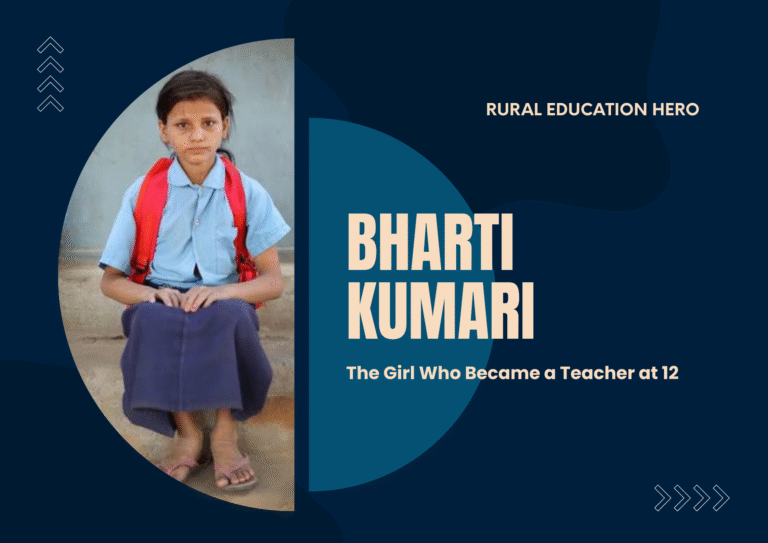
In the remote corners of India, where even basic amenities like electricity and clean water are hard to find, education often becomes a distant dream. But sometimes, a young spark ignites a fire of change. Bharti Kumari, from Kusumbhara village in Jharkhand, became such a spark. At just 12 years old, she took charge of educating children in her village, creating a wave of hope through her selfless dedication to general education.
Her story is a testament to the fact that you don’t need to be an adult to make an impact—you just need the will to act.
Who is Bharti Kumari?
Bharti Kumari hails from a humble background in Kusumbhara village, situated in the Naxal-affected regions of Jharkhand, where government services and educational resources are minimal. Her father worked as a daily wage laborer, and her family struggled to make ends meet. Despite the harsh realities, Bharti managed to attend a government residential school.
But what made her different was her empathy. She noticed that many of her peers—especially girls and children from marginalized communities—were deprived of education due to poverty, lack of teachers, and social stigmas.
Also Read: Gagan Pratap – Inspiring Journey of India’s Renowned Maths Educator
A One-Girl Mission to Educate a Village
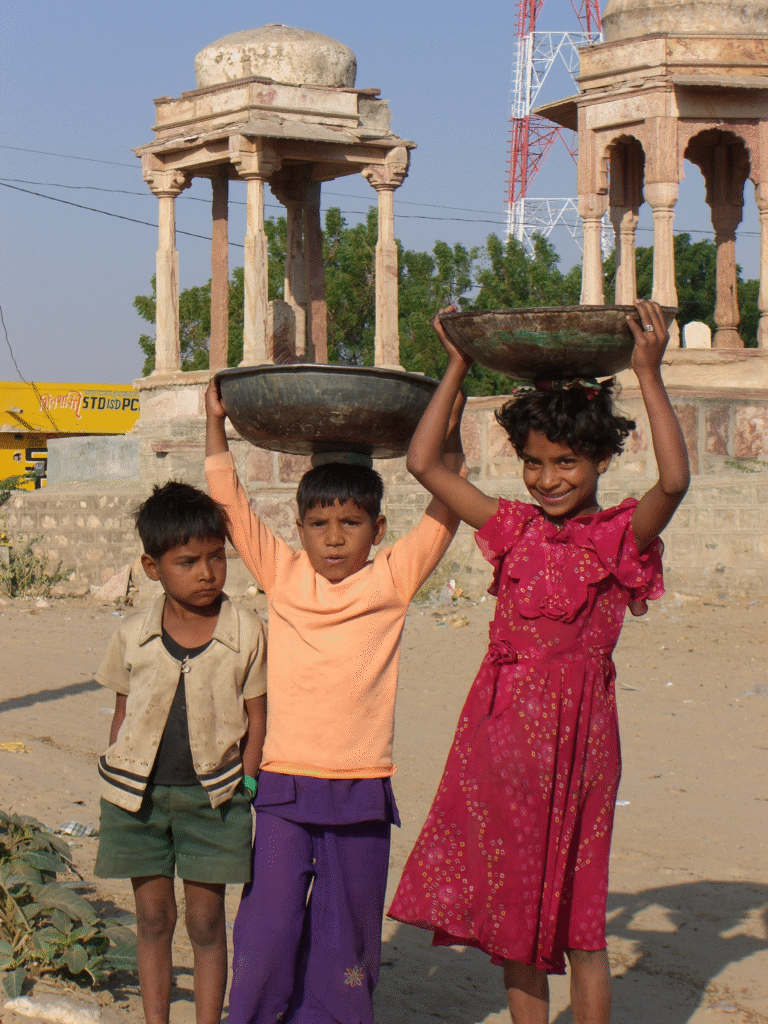
At the age of 12, Bharti began teaching under a tree, using bits of chalk, discarded slates, and sheer determination. What started as tutoring a few neighborhood kids soon turned into a proper informal school, where over 50 children began to gather every day.
She taught them:
- Basic literacy and numeracy
- Alphabets and numbers
- Poems and songs
- Hygiene, discipline, and moral values
With no formal training, infrastructure, or financial support, Bharti’s efforts were driven purely by passion and purpose.
The Reality of Kusumbhara Village
In many tribal and remote areas of India, education is often considered non-essential. Parents, especially those engaged in labor-intensive jobs, prioritize short-term survival over long-term learning. In Kusumbhara, the nearest functional school was miles away, and teachers were either irregular or absent.
Bharti became the only consistent source of education in her village. Her school was not just a place of learning—it became a safe space for children, particularly girls, who otherwise would have been pushed into household chores or early marriages.
Also Read: Amar Sir: The Inspirational Mentor Changing Lives Through Knowledge and Motivation
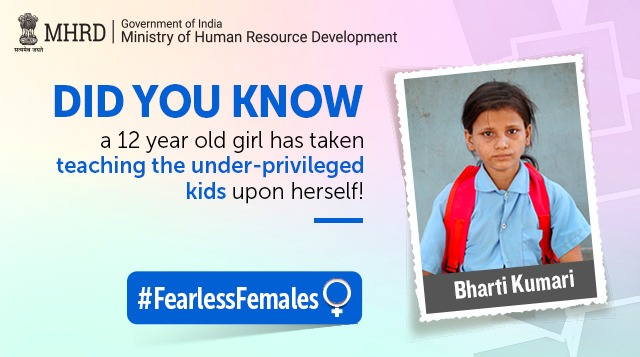
What Sets Bharti Kumari Apart?
Bharti Kumari’s work is revolutionary because:
- She was a child teaching other children, breaking the age hierarchy of traditional education
- She ran a school without any external support or funding
- She focused on inclusive education, welcoming children from all castes, communities, and backgrounds
- She made education relatable by using local dialects and examples
Her model—though simple—was profoundly impactful, built on trust, community engagement, and a deep-rooted belief in the power of knowledge.
National Recognition
Bharti’s exceptional story soon caught the attention of media and organizations across India:
- She was recognized by NDTV during their “Behtar India” campaign
- Featured in The Better India, YourStory, and India Today
- Applauded by national leaders and educators as a symbol of grassroots empowerment
Her story was not just inspirational; it was a call to action for civil society, the government, and educational NGOs to invest in rural changemakers.
Also Read: Sumersingh Rajpurohit (Last Moment Tuitions): Your Ultimate Guide for Last-Minute Study Success
Community Transformation Through Education
Bharti’s impact extends far beyond academics. She has:
- Reduced child labor in her village by enrolling children in classes
- Created awareness among parents about the importance of education
- Empowered girls to stand up for their right to learn
- Set an example that anyone, regardless of age or status, can be a leader
In a region where children are often seen as passive recipients, Bharti showed that children can be catalysts of change.
Challenges Faced by Bharti Kumari
Her journey, however, was not without obstacles:
- Lack of infrastructure: No classroom, blackboard, or chairs
- Social resistance: Some villagers didn’t take a girl teacher seriously
- Financial hardships: Her family’s income was barely enough for food
- Safety concerns: Kusumbhara was in a Naxal-prone area with limited law enforcement
Yet, she remained undeterred. Her resilience serves as a powerful example of what courage and commitment can achieve.
The Bigger Picture – Bharti as a Symbol of Hope
In the global conversation about UN Sustainable Development Goals (SDGs)—especially Goal 4 (Quality Education)—Bharti’s grassroots model holds incredible relevance. She proved that even in the absence of digital tools, smart classrooms, or trained faculty, education can thrive when driven by community and compassion.
Her story is now taught in educational leadership forums as a case study in micro-level impact with macro-level inspiration.
What Lies Ahead for Bharti Kumari?
As Bharti continues her own studies, she dreams of:
- Becoming a government teacher to serve her village officially
- Building a proper school building for her informal school
- Collaborating with NGOs to get books, uniforms, and meals for her students
- Encouraging more girls to lead community education initiatives
Bharti’s journey has just begun. With the right support, she can become a national icon for rural education reform.
Final Thoughts – The Girl Who Lit the Flame of Learning
Bharti Kumari may not be a household name yet, but her impact is deeper than most policy initiatives. She embodies the true spirit of education—not as a service or a business, but as a shared, human responsibility.
In her simplicity lies her strength. In her innocence, her power. Bharti reminds us that we don’t need degrees to teach, wealth to build schools, or titles to lead. Sometimes, all it takes is a heart that refuses to accept injustice—and the courage to teach under a tree.
FAQs
Q1. Who is Bharti Kumari?
Bharti Kumari is a young girl from Kusumbhara village, Jharkhand, who started teaching children at the age of 12, running a free informal school for underprivileged kids.
Q2. Where is Kusumbhara located?
Kusumbhara is a remote tribal village in Jharkhand, India, often affected by poverty and low literacy rates.
Q3. How many children did Bharti teach?
Bharti taught over 50 children from her village, covering basic literacy and moral education.
Q4. Is Bharti Kumari’s school recognized?
While it started informally, her school has gained attention and support from NGOs and media outlets, though it is not yet officially recognized.
Q5. How can I support Bharti Kumari’s mission?
You can contribute by donating books, stationery, or funds through verified NGOs working in rural education or by volunteering.